

Kilkim Žaibu XVI Festival: A Friday Deep Inside Lithuania
By Randall, Editor, Fermented Metal Magazine. Field report from Smetonos dvaras, Ukmergė district, Lithuania — June 26, 2026
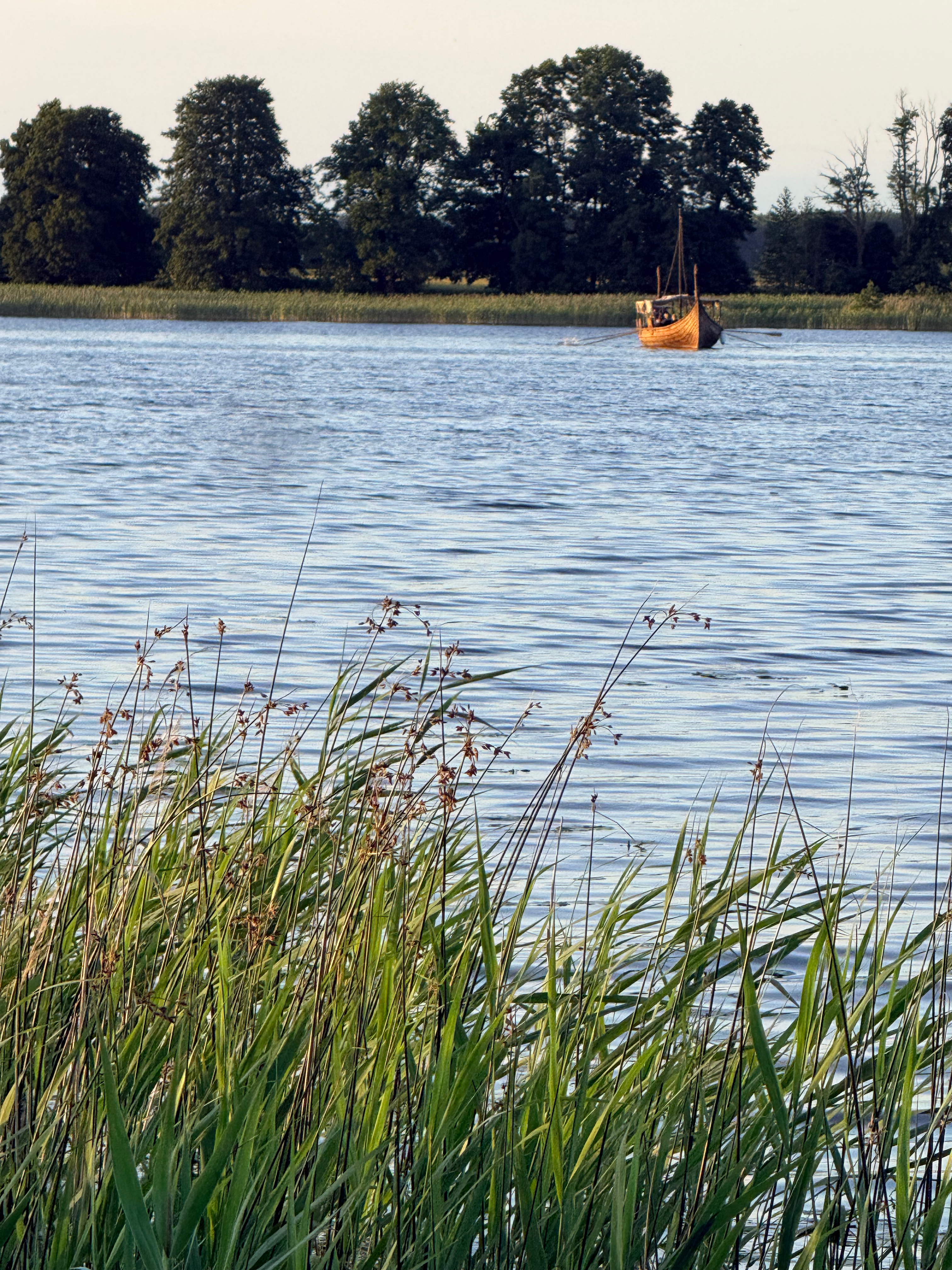
Kilkim Žaibu — Lithuanian for "arise/soar with the lightning" — has run every summer since 1999, and this year's edition, the 26th, settled onto the grounds of Smetonos dvaras (the Antanas Smetona Manor) on the shore of Lake Lėnas in Ukmergė county, running June 25–27. Friday, June 26 was the day I came through the gate, after driving an hour so from Vilinius airport: media accreditation in hand, a VIP parking pass that put the car close to the main grounds, and a desk in the festival's media room for the day. Goda met me onsite and walked me through logistics; Rolanda handled the rest from a distance, keeping the day's schedule on track between sets. Between the two of them, a day that could easily have dissolved into chaos — two stages' worth of folk, thrash, and black metal music, mock battles, and a brewing demonstration — stayed workable.

The festival has moved around Lithuania more than once since 1999 — Joniškis in its early years, then two decades centered on Lake Lūkstas near Varniai, a stop in Žagarė, and since 2022 its current home in Ukmergė district. What hasn't moved is the premise: this is a metal festival built on top of a living Baltic culture festival, not a metal festival wearing pagan imagery as a costume.
Arising with the Lightning: Kilkim Žaibu, Friday June 26
I put a question directly to the Kilkim Žaibu media team in the sit-down conducted ahead of the festival (the full exchange runs at the end of this piece): which comes first, the Baltic-culture programming or the music? Their answer was that the two were never sequential. Baltic identity — paganism, historical reconstruction, craft traditions — was the community's founding interest, and the musical side grew out of a Pagan/Folk/Black Metal scene that has since broadened into the wider "extreme music" umbrella that covers the current bill. As they put it, extreme music today functions as "the contemporary expression of the same identity and cultural values that have always been at the heart of the festival."

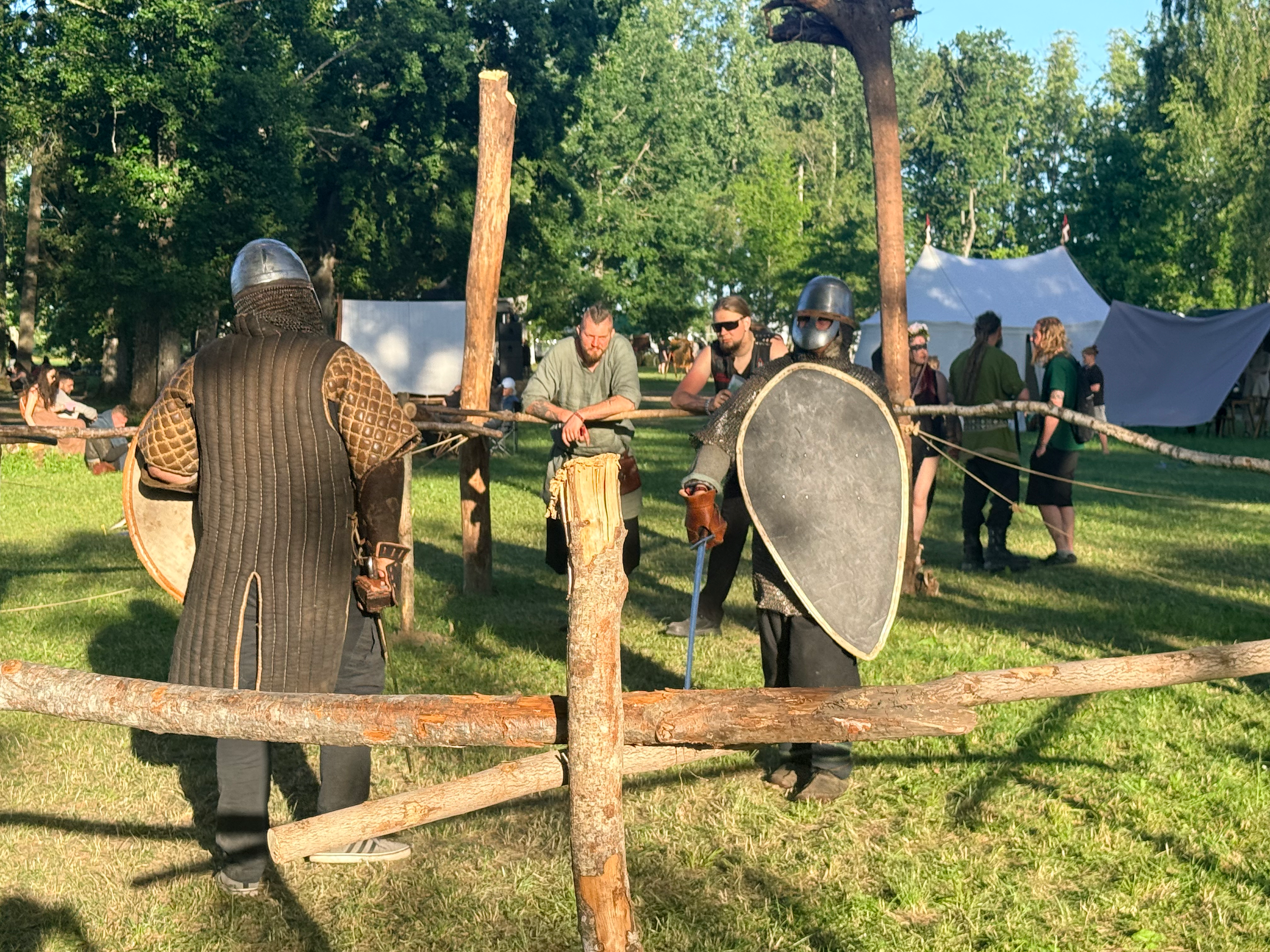
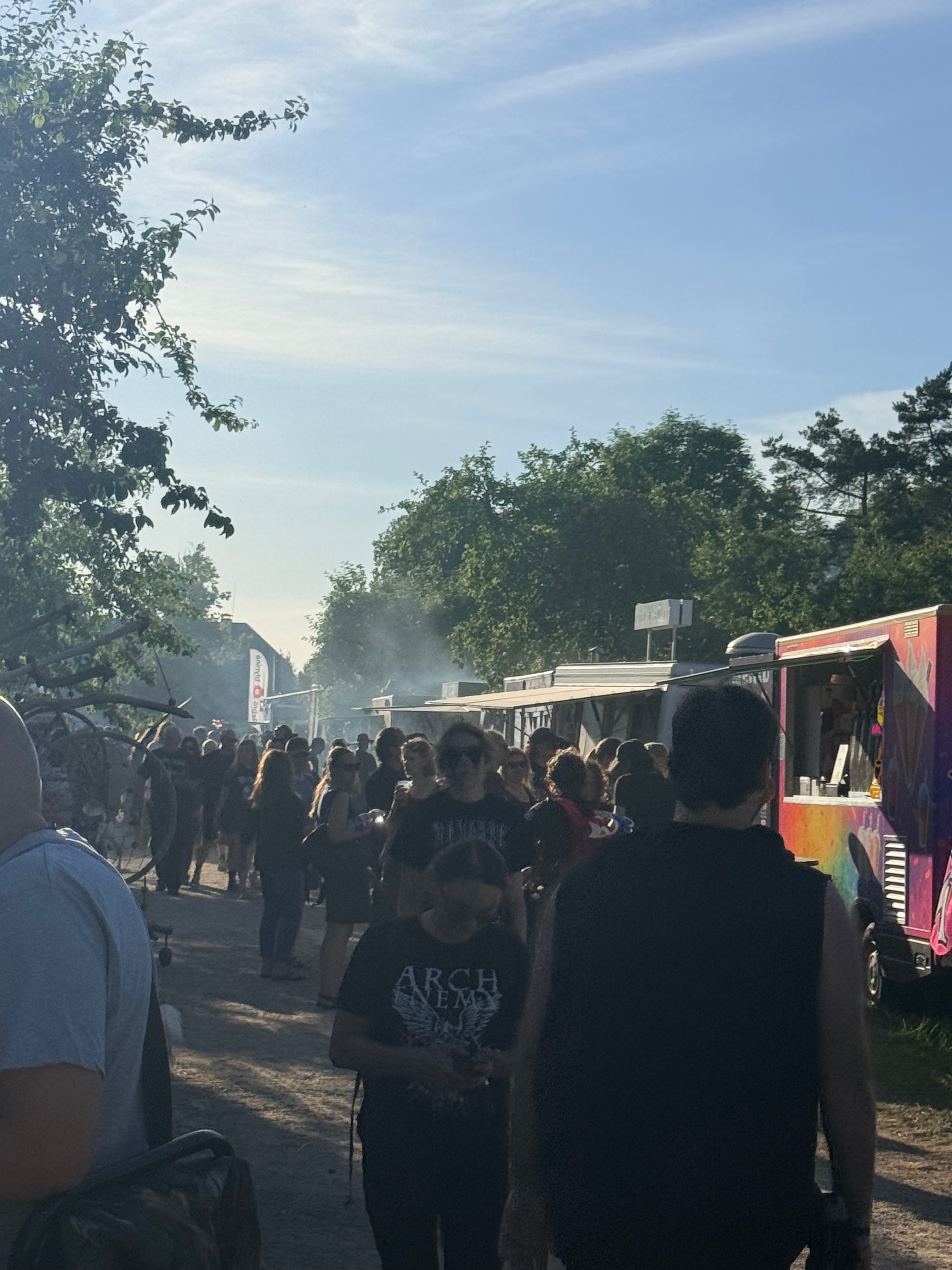
That framing was visible everywhere on the grounds Friday — not staged Viking cosplay, but the same reenactment groups, craftspeople, and pagan cultural practitioners who build the festival's cultural program each year and who the organizers say are responsible for its historical accuracy, not an outside consultant brought in for authenticity's sake. It takes a real amount of labor to pull off: by the organizers' own count, roughly 120 organizers and volunteers, about 300 craftspeople and reenactors, and around 50 accredited media (myself included) — close to 500 people in total, none of them paid in the traditional sense, on a festival the organizers describe as run on passion rather than commercial motivation. Attendance runs 4,000–7,000 across the weekend, with an estimated 20–30% traveling in from Latvia, Estonia, Poland, Finland, Germany, and elsewhere in Scandinavia.
The venue relationship matters to the organizers, too. Being hosted at the Antanas Smetona Manor Museum, and the working relationship built with the Ukmergė district more broadly, was something they returned to more than once in our conversation — extreme music is a scene "often misunderstood by wider society," and the openness shown by both the museum and the district carries real weight for a community used to being met more skeptically.


Friday's Full Music Lineup
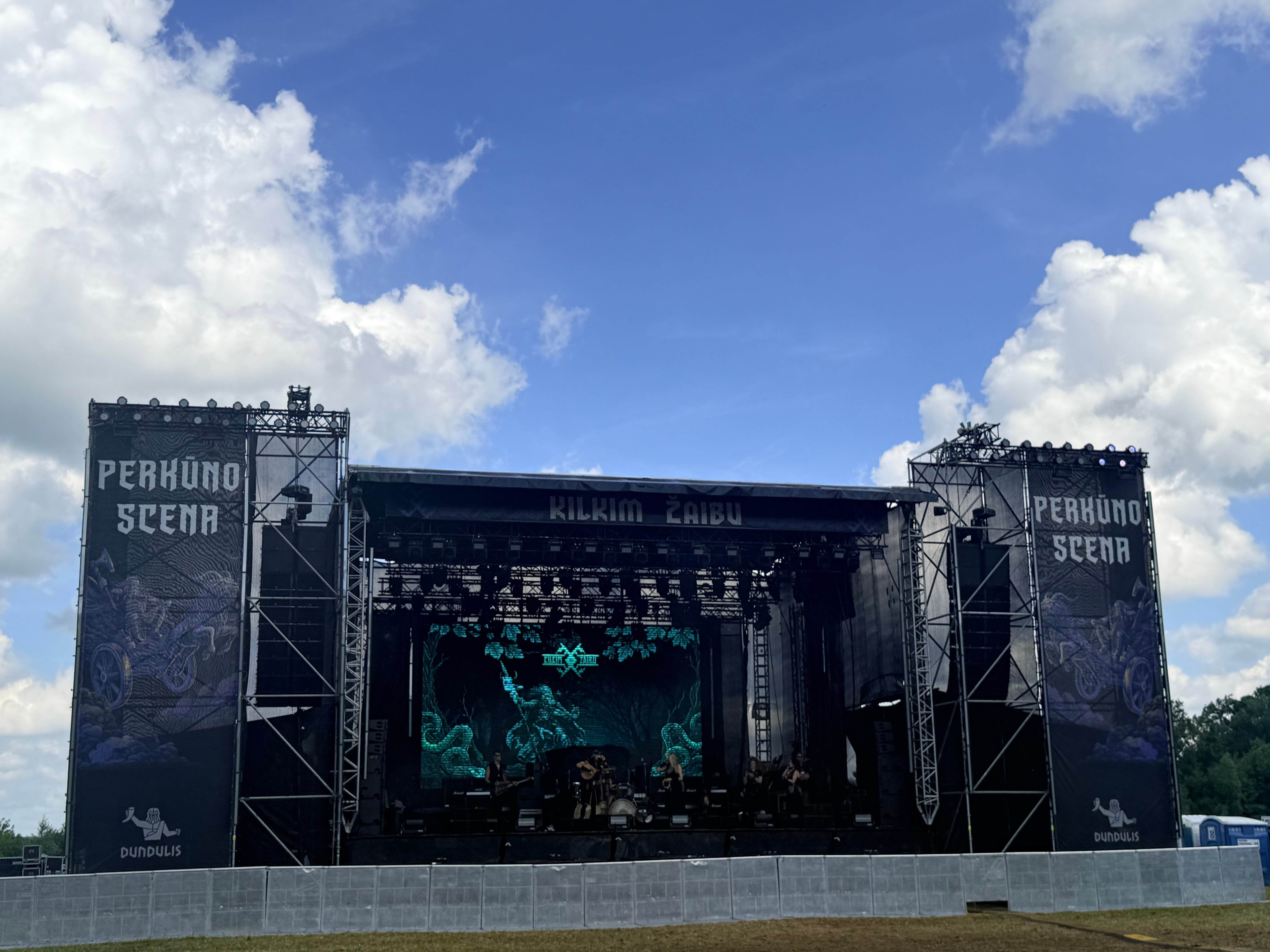
Friday, June 26 ran two main stages in parallel — Pikuolis and Perkūnas — plus a late-night set on the Folk Stage, stretching from archaic folk music in the early afternoon to black metal past 2 a.m. Per the festival's official published program, the full running order was:
Pikuolis Stage
-
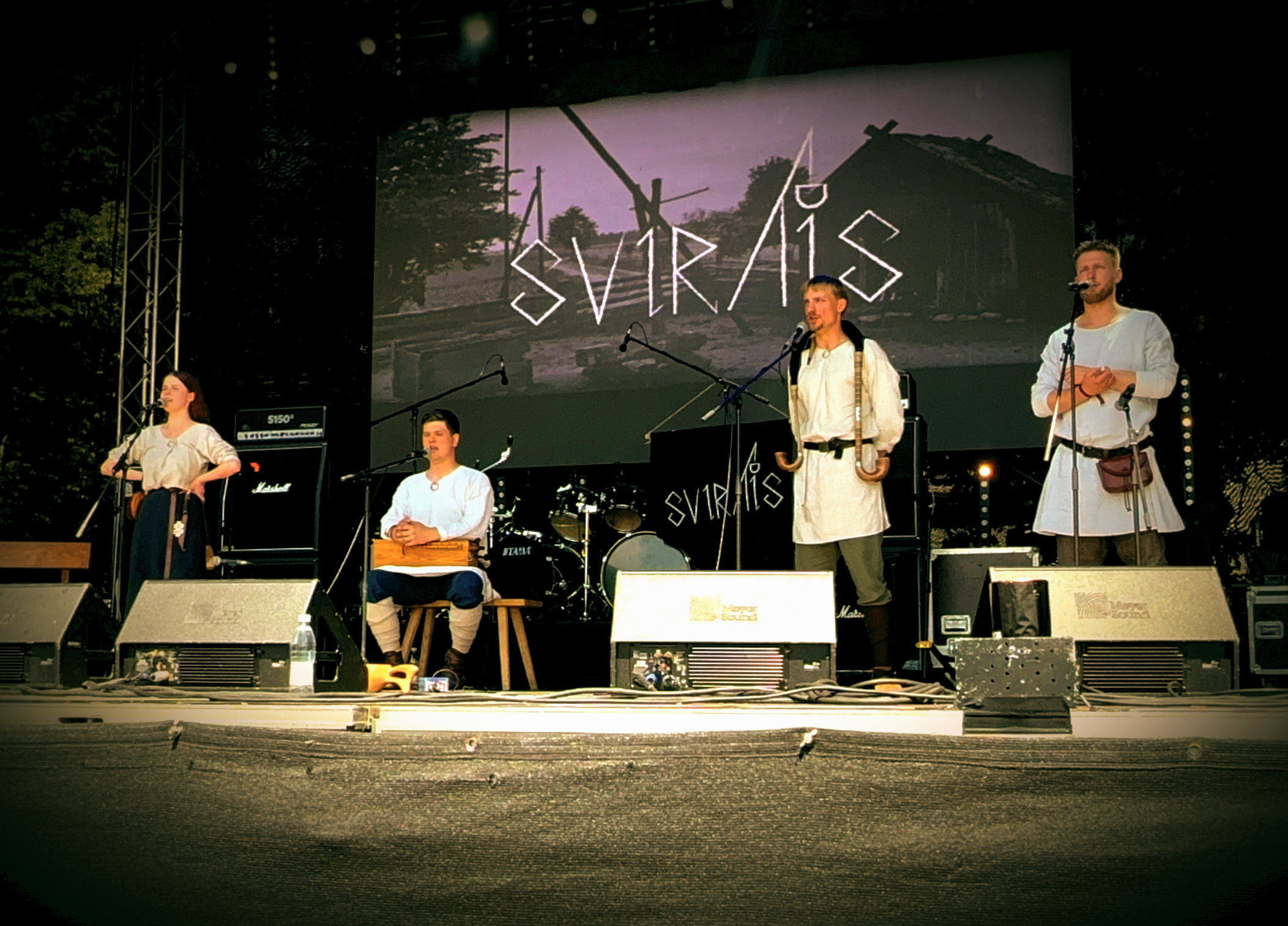
13:30–14:20 — Svirtis (Lithuania) — archaic folk music
-
15:10–16:00 — Daj Ognia (Poland) — dark folk
-
17:00–18:00 — Phrenetix (Lithuania) — thrash metal
-
19:00–20:00 — Weljar (Poland) — dark folk
-
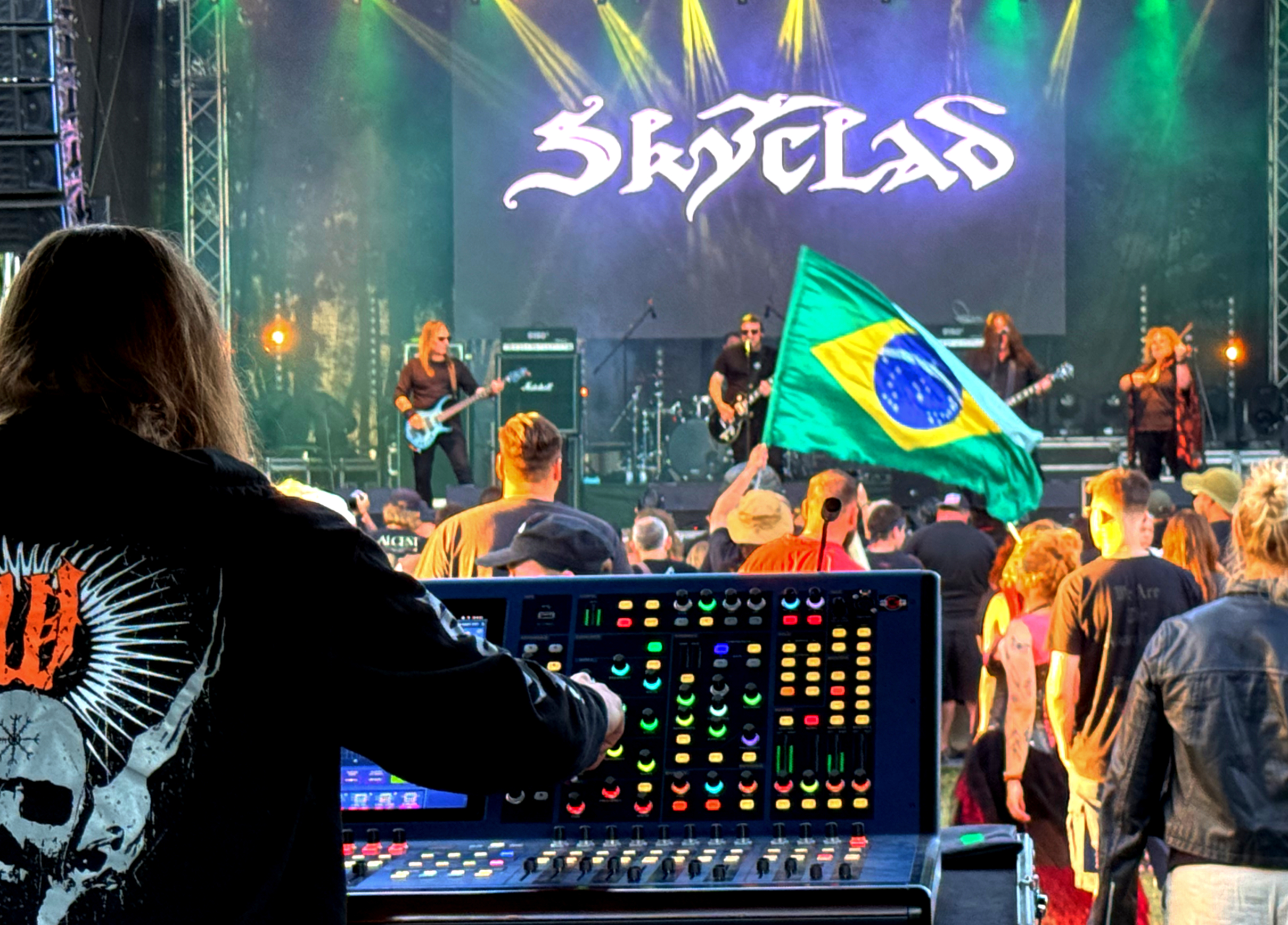
21:00–22:00 — Skyclad (United Kingdom) — folk metal pioneers
-
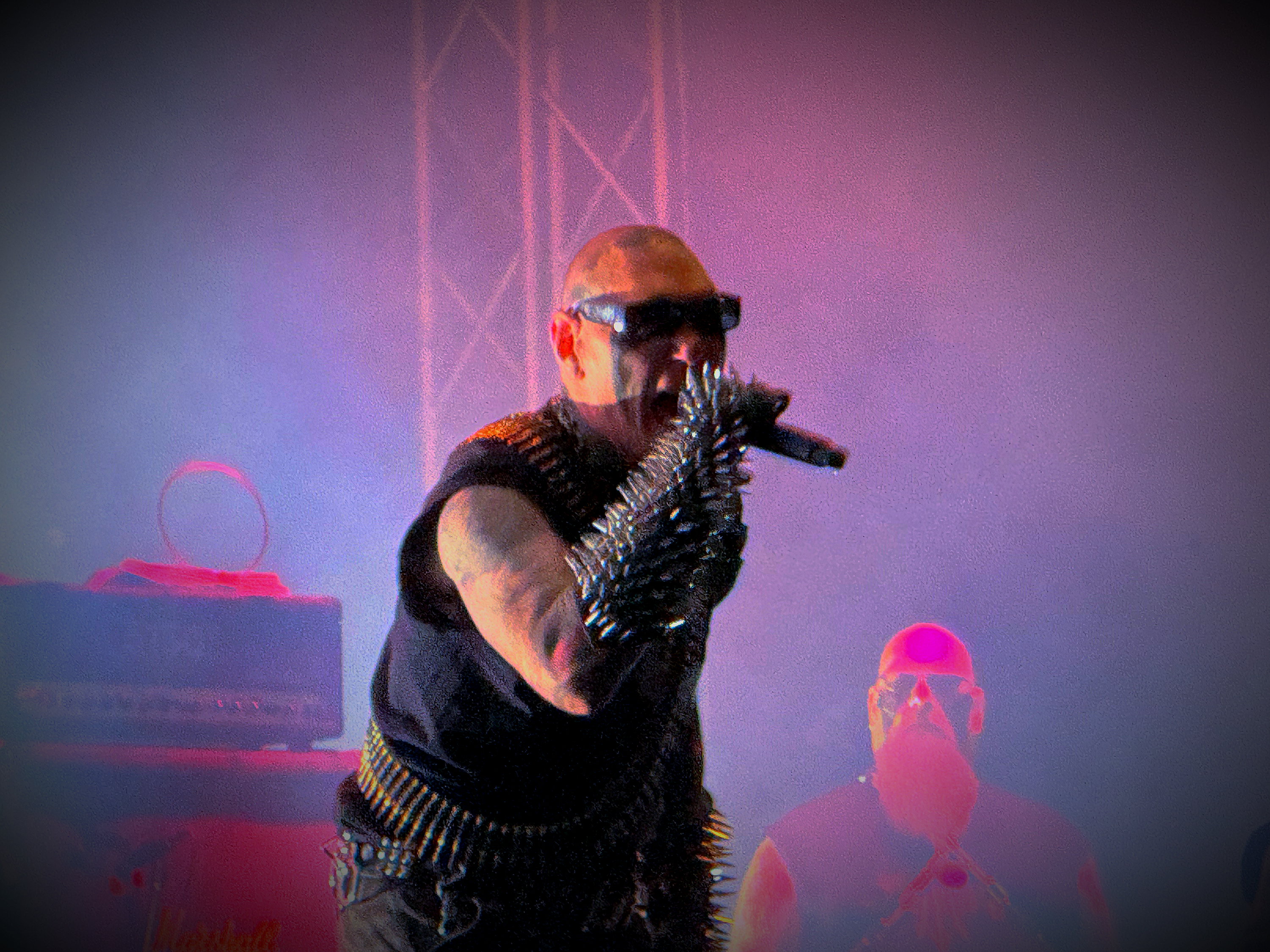
23:00–00:00 — Blasphemy (Canada) — black death metal cult legends
-
01:10–02:10 — Asagraum (Netherlands) — black metal witch ritual
Perkūnas Stage
-
14:20–15:10 — Hansanova (Lithuania) — medieval music
-
16:00–17:00 — Ūkanose (Lithuania) — folk metal
-
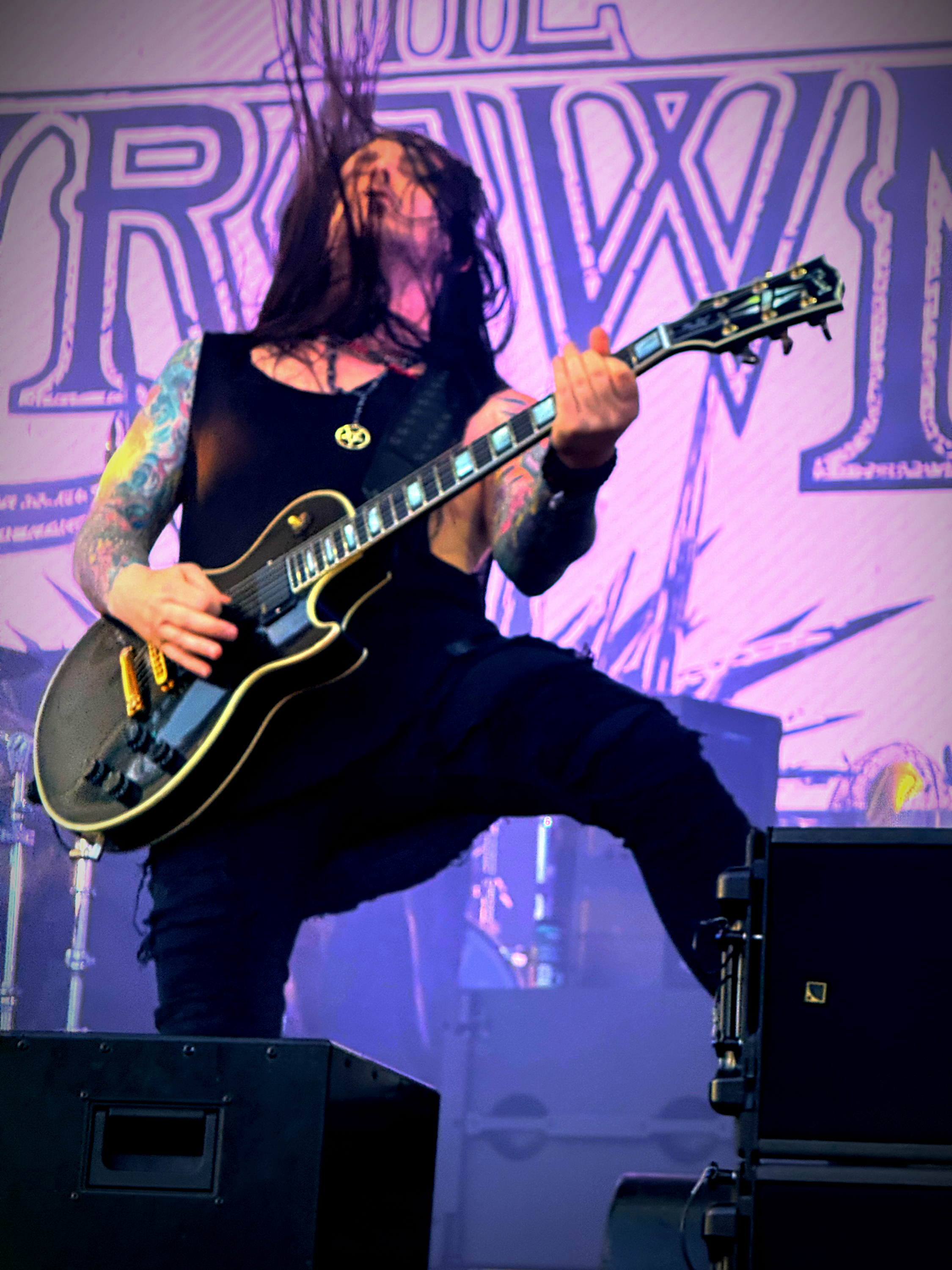
18:00–19:00 — Firtan (Germany) — new-wave pagan metal
-
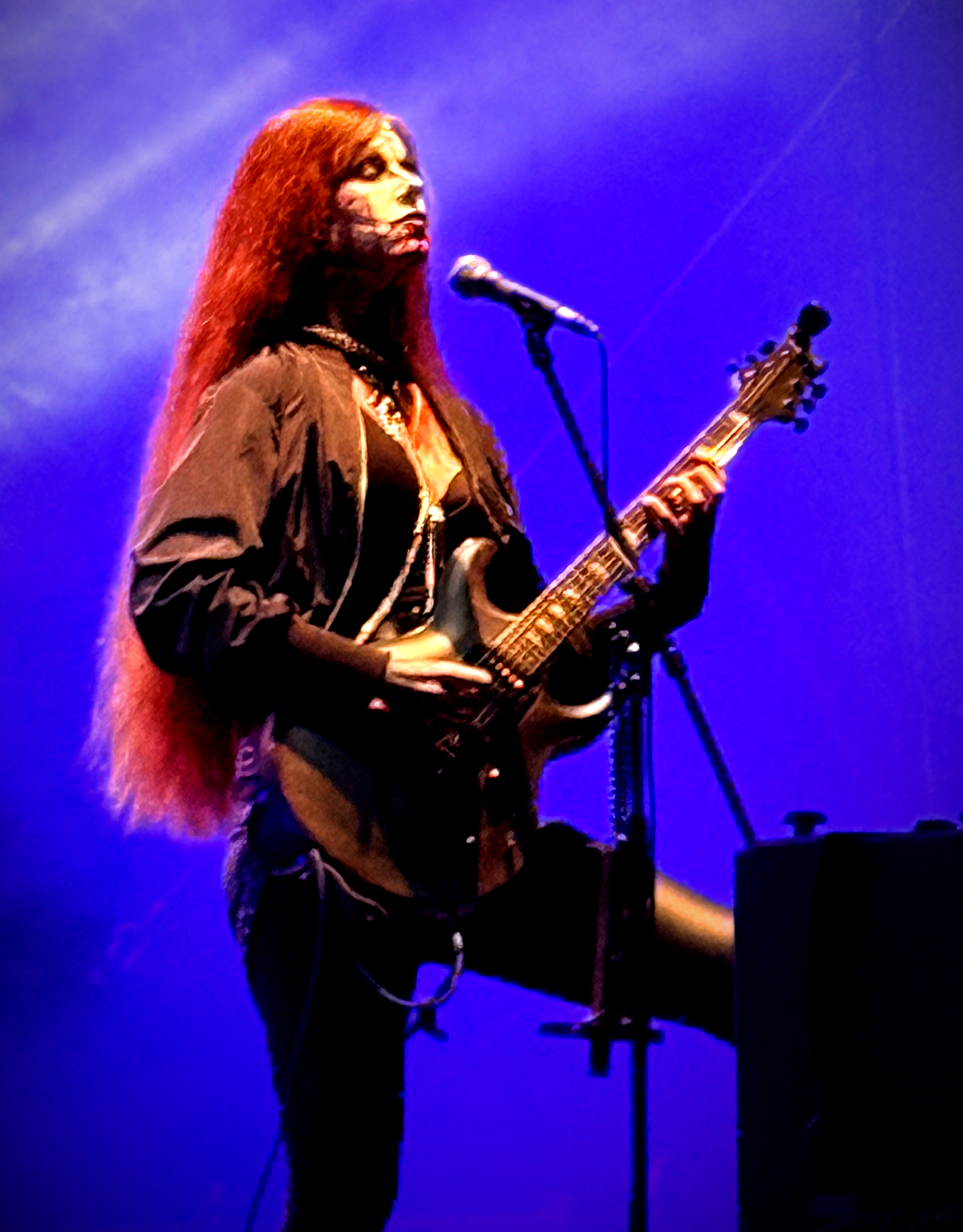
20:00–21:00 — The Crown (Sweden) — billed as the band's final concert
-
22:00–23:00 — Messa (Italy) — modern heavy music
-
00:00–01:10 — Blood Fire Death (international) — a tribute project dedicated to Bathory
Folk Stage
-
01:10–02:30 — Tankuojis (Lithuania) — late-night folk gathering
Two things stood out in the shape of the day.
One: Skyclad, generally credited as one of the founding acts of folk metal as a genre, played a full hour on Pikuolis at 9 p.m. — a lineage-defining slot ahead of Blasphemy's black death metal cult set at 11.
Two: The Crown's 8 p.m. Perkūnas slot was billed as the band's final concert in Lithuania, which puts a notable exclamation point on Friday's bill beyond the festival itself. By midnight, the two stages were running a genuinely hard split: Blasphemy's war-metal assault on Pikuolis against Blood Fire Death's Bathory tribute on Perkūnas, with Asagraum closing out the night on Pikuolis past 1 a.m.


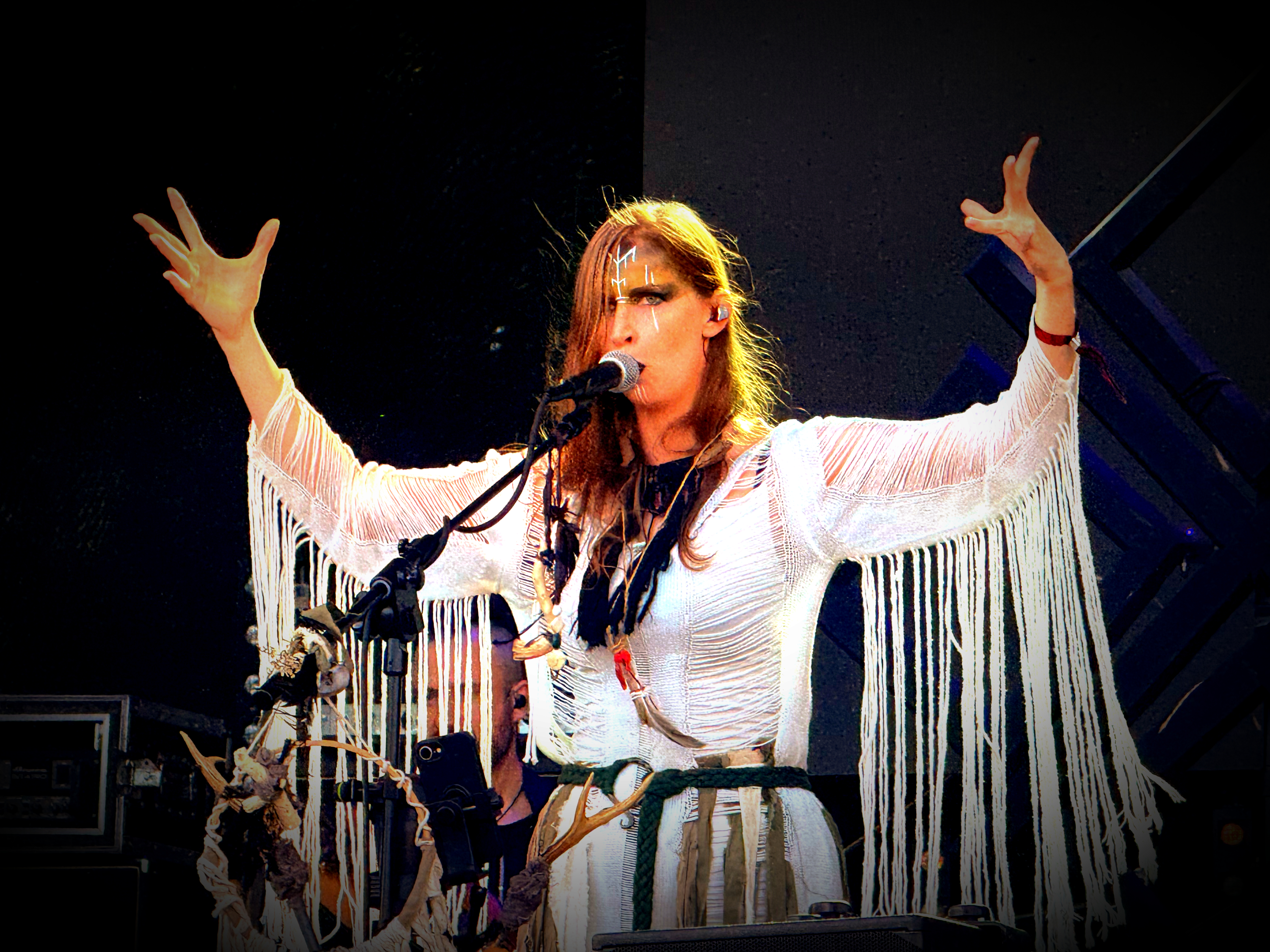
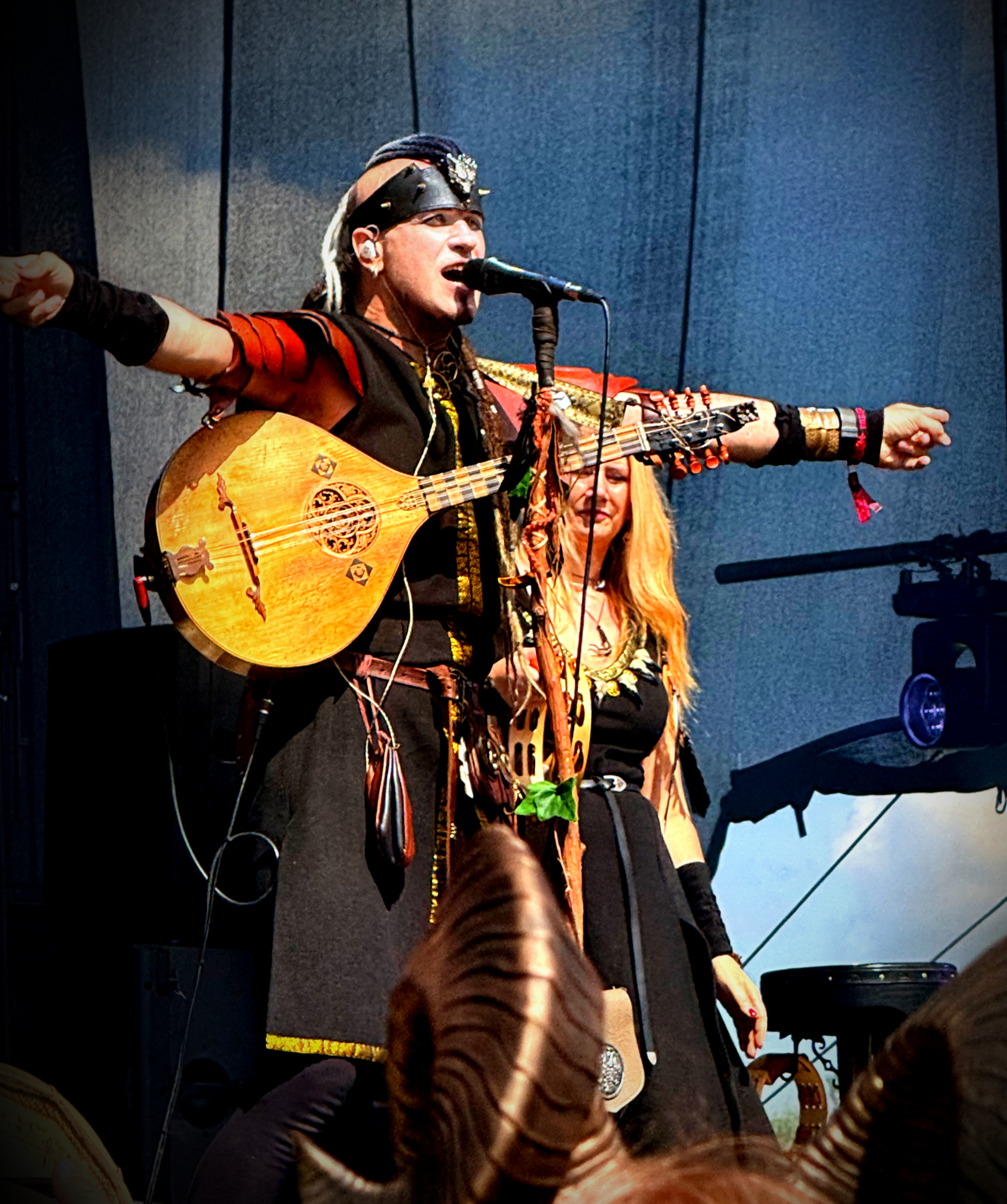
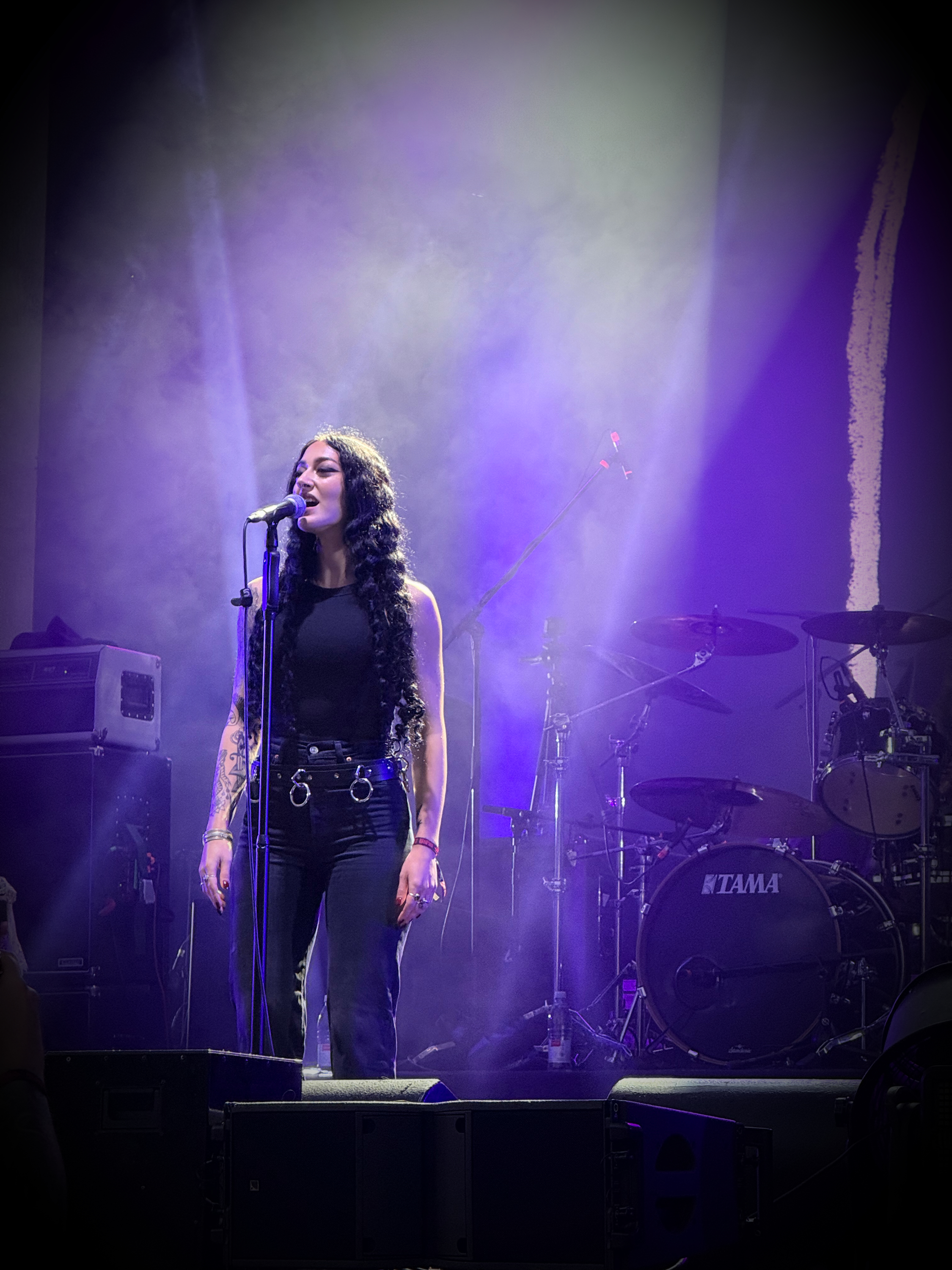
.jpg)
.jpg)
.jpg)
.jpg)
.jpg)
.jpg)
.jpg)
.jpg)
Lithuaninan Brewing: Artūras Masiliauskas, Vykintas Motuza, and Living Beer Traditions
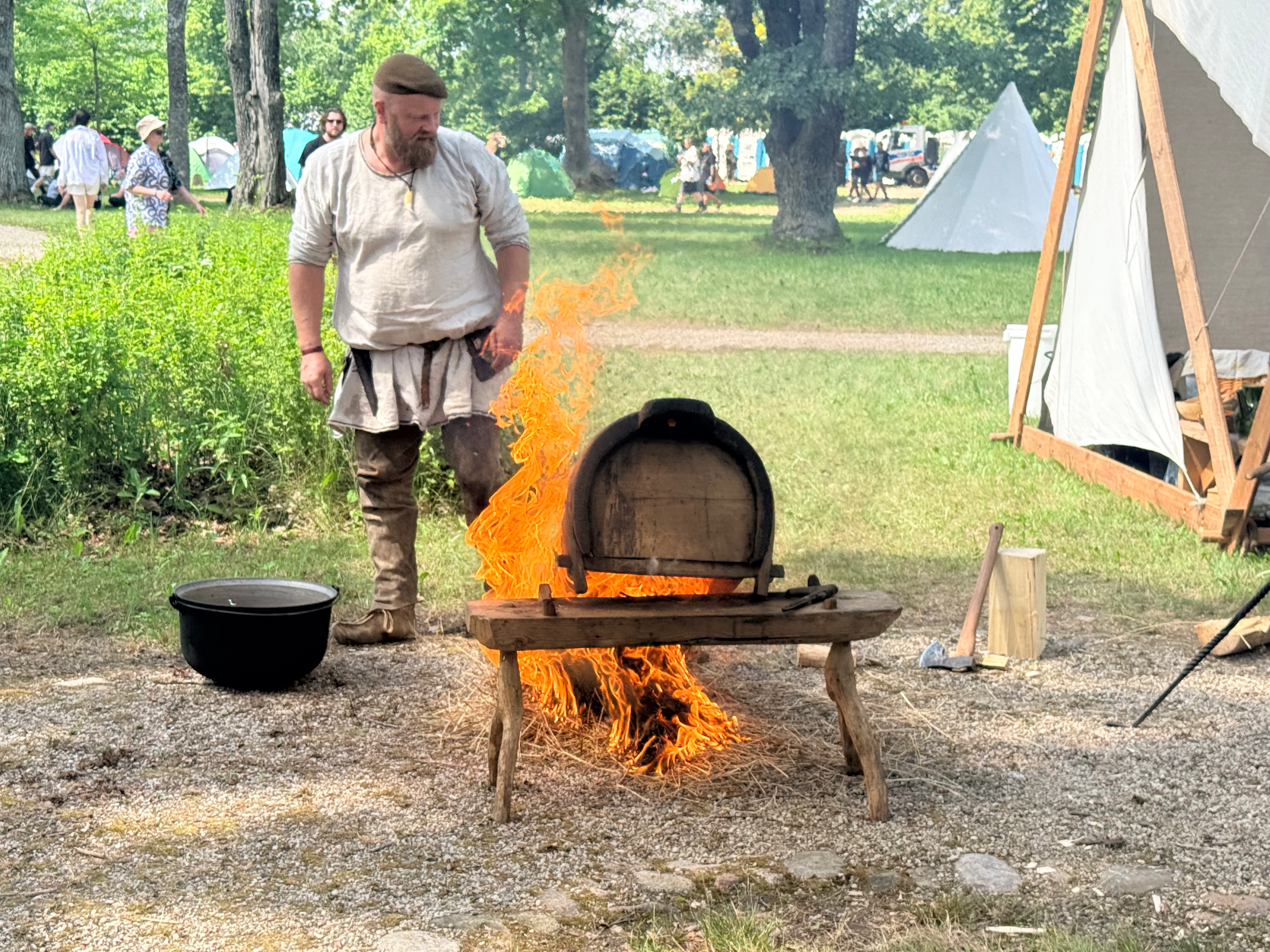
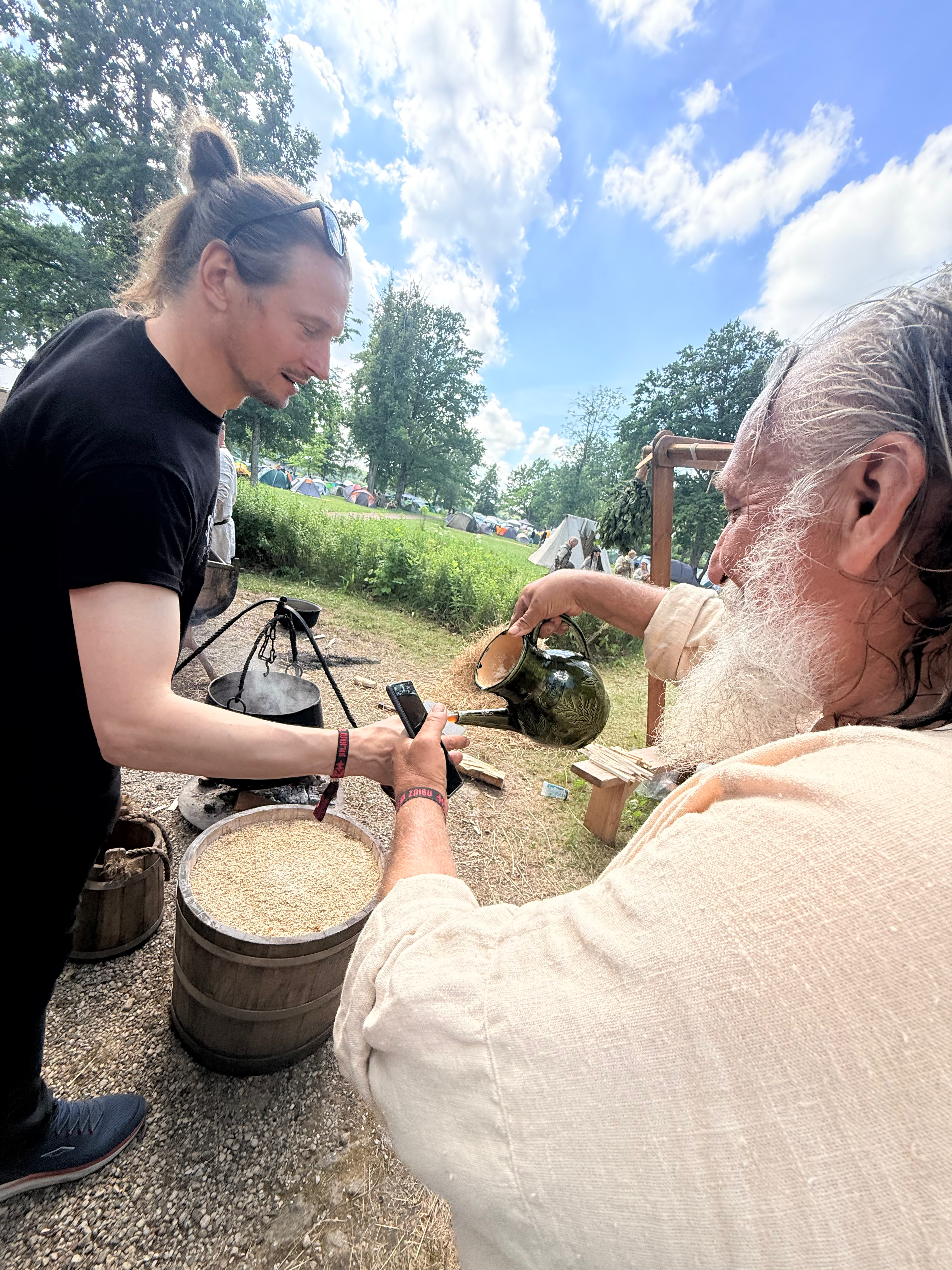
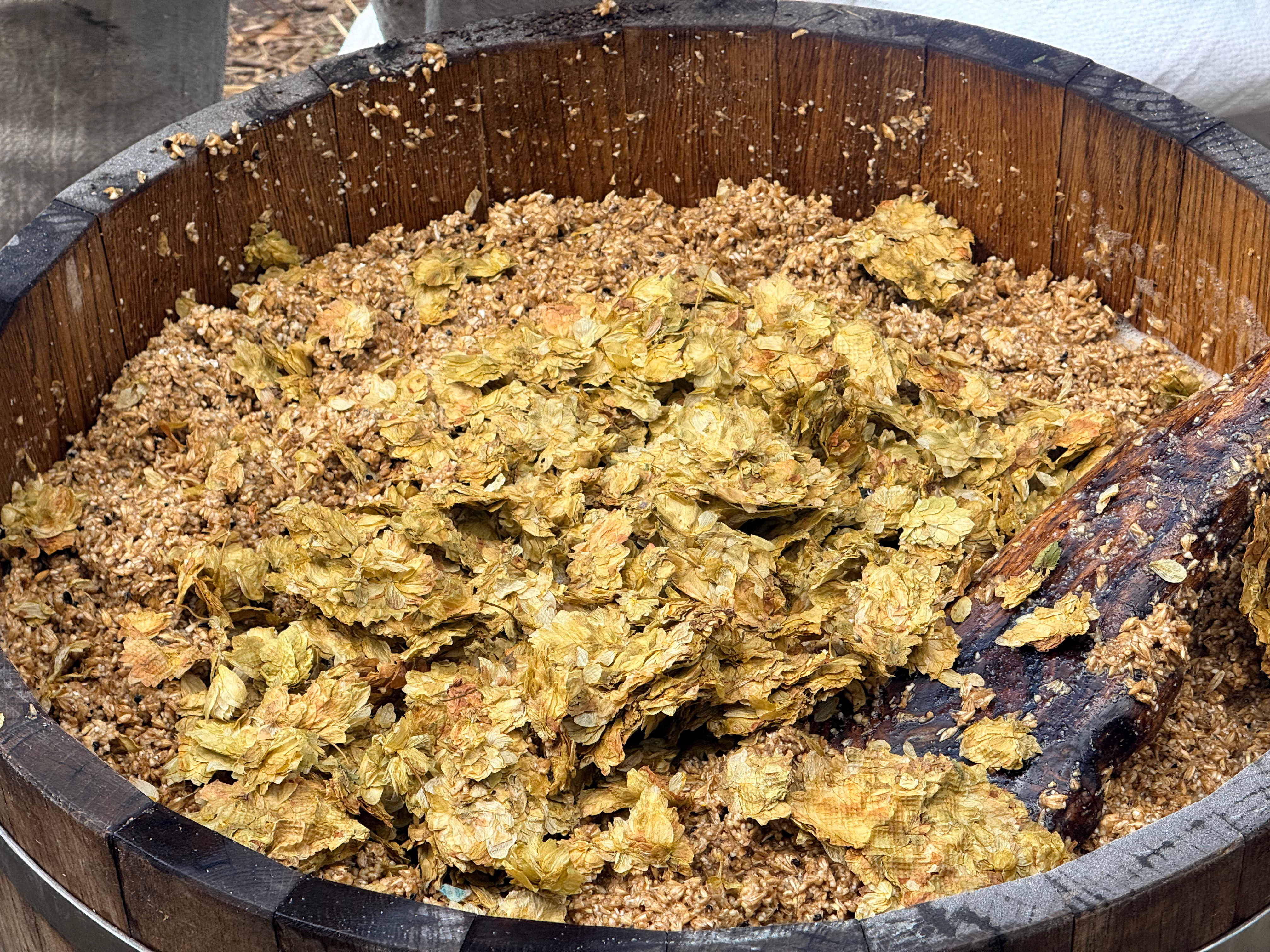
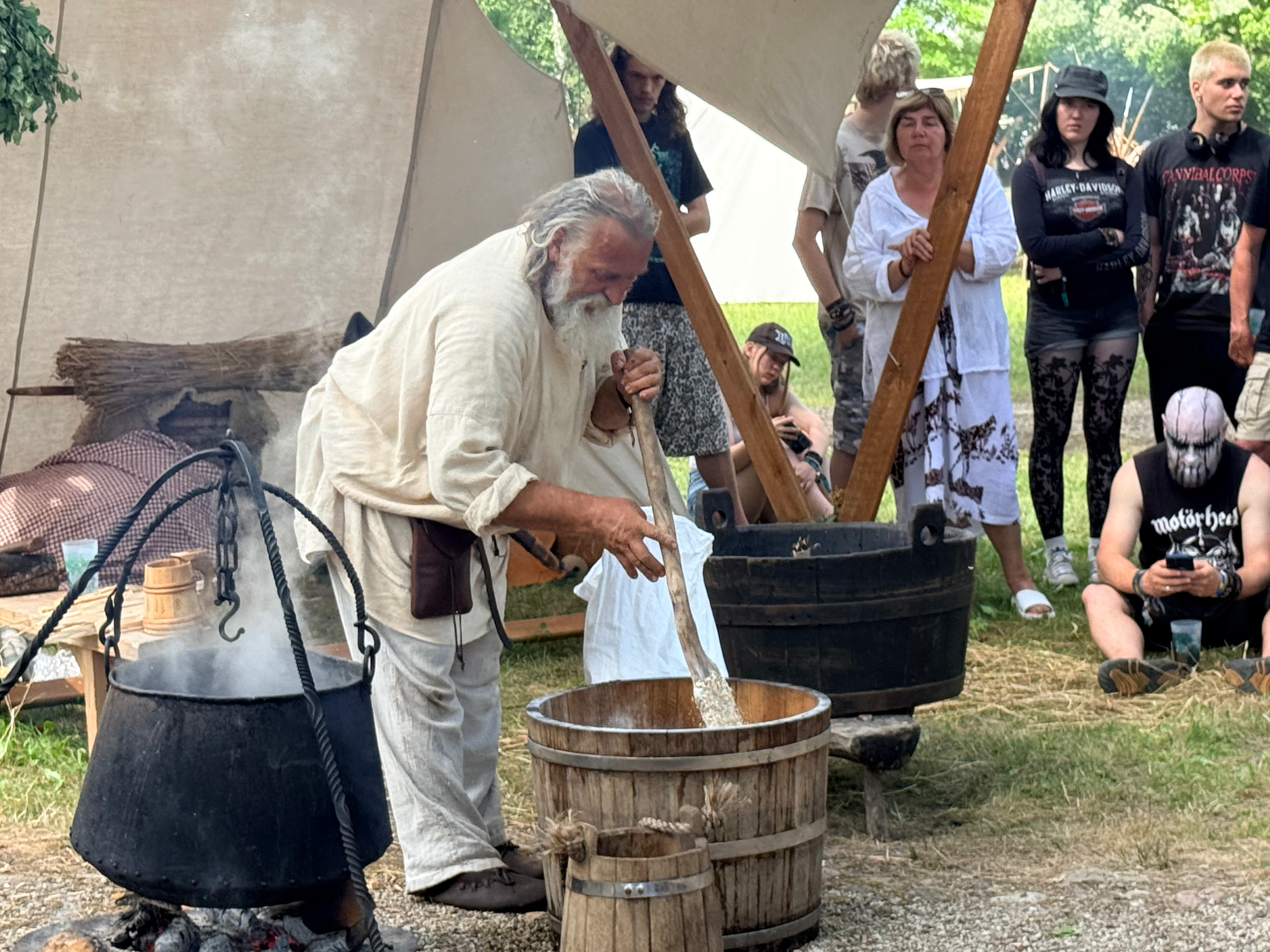
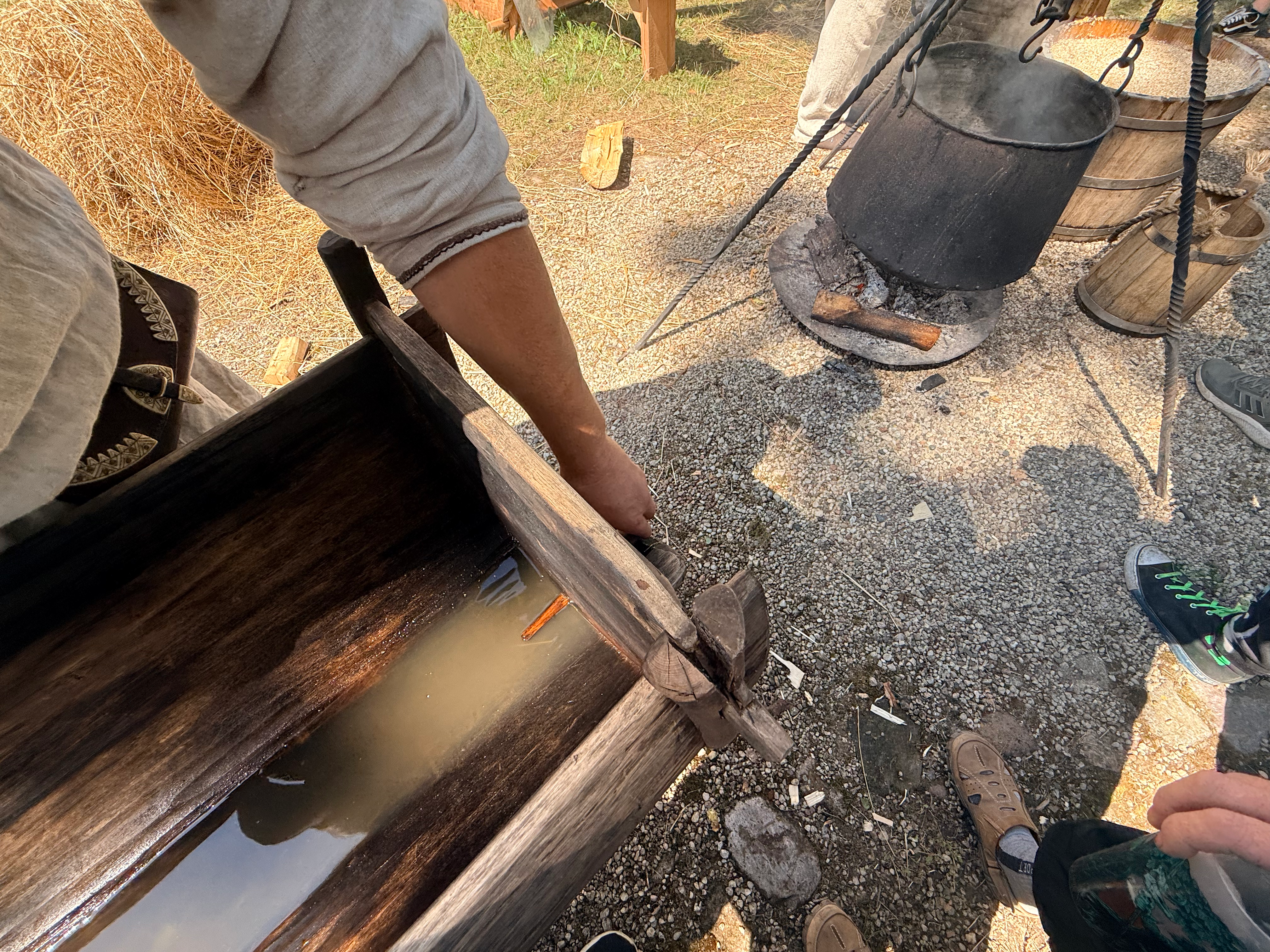
From 2:00 to 3:00 p.m., the Crafts Yard hosted a beer brewing workshop with two Lithuanian brewers, Artūras Masiliauskas and Vykintas Motuza, sandwiched between wooden beer mug carving, Baltic sash weaving, leatherworking, chainmail-making, and the Ancient Baltic Tribal Village. For a festival that presents itself as an ethnic-culture event as much as a metal one, that slot wasn't a side attraction — it was as central to the day as anything on Pikuolis or Perkūnas, especially for Fermented Metal.

Vykintas Motuza and Artūras Masiliauskas at Kilkim Žaibu
Masiliauskas and Motuza represent two different lineages of the same tradition. Masiliauskas — known in Lithuania's brewing community by the nickname Peckelis — has Samogitian roots, lives in Kaunas, and trained as a scientific agronomist at the Lithuanian Academy of Agriculture after growing up with his grandparents in Lopaičiai. He fermented his first cider under his grandfather's supervision at age twelve, returned seriously to beer in 2012, and made a full professional shift into brewing a few years later, after two decades working in agricultural institutions. That agronomy background shows up directly in his brewing: he's one of the clearest living links to Lithuania's pre-industrial techniques, including tekintas alus (beer made without boiling the wort) and akmeninis alus — stone beer, in which the mash is heated with hot stones dropped directly into it. Recipes of his have gone on to be brewed commercially, including at Pilialaukis, one of this year's two festival beer partners.
Motuza works from the other direction. A certified knife maker and craftsman living in Paandrioniškis village in the Anykščiai district, his brewing grows out of a broader practice of historical reconstruction — reviving Lithuanian knife-making traditions that had lapsed for centuries, working with old tools, and treating beer-making as inseparable from the rest of rural material culture. For years he's organized Sekminių sambariai, a spring beer-making, tasting, and hospitality gathering in Andrioniškis that marked its tenth edition in 2025 — founded, by his own account, partly so he could sit with older local brewers, have them walk through their methods, and keep that knowledge moving forward rather than let it die with them. In Motuza's telling, beer in that part of Lithuania was never a luxury item; a household kept beer to offer guests, full stop. His reach now extends beyond Lithuania: Norway's Norsk Kornølfestival announced in June 2026 that he'd return to demonstrate keptinis, a Lithuanian farmhouse method in which the mash is baked in an oven before fermentation.


The shape of what the session represented: not a demonstration staged just for festival goers, but a continuation of exactly the kind of transmission-by-doing that Kilkim Žaibu's own media team pointed to when I asked them who's responsible for the festival's cultural authenticity — craftspeople and practitioners, not outside consultants. Beer, stone, wood, and grain sitting in the same Crafts Yard as the mug carvers and the chainmail makers, on the same day as Phrenetix, Ūkanose, Skyclad, and Blasphemy — at Kilkim Žaibu, that's not a contrast. It's the same thunder.

Dundulis: Lithuania’s Farmhouse Fire, Bottled
Dundulis is one of Lithuania’s most fascinating breweries because it refuses to choose between past and present. It makes IPAs, stouts, pilsners, saisons, barrel-aged beers, and modern hop-forward ales, but its real power comes from something older: Lithuanian farmhouse brewing, botanical beer, baked malt, stone beer, wild fermentation, and a deep attachment to local ingredients.
The brewery’s own origin story begins in 2012, when entrepreneurial home brewers joined forces with the experienced Panevėžys and Širvėnos breweries to create a new Lithuanian beer project. Dundulis describes itself as “the beer with the local touch,” and that phrase is not empty branding. Its brewing philosophy is built around Lithuanian nature, local herbs, flowers, fruits, historic archives, and the surviving knowledge of rural brewers.
The business roots run through Širvėnos bravoras in the Biržai region, an area with a strong brewing identity. Lithuanian business records list Tomas Cesevičius as director of UAB Širvėnos bravoras, and Lithuanian press accounts trace the Čepukai brewery to 1991, with Cesevičius acquiring it in early 2010. Dundulis later became the more adventurous public face of this brewing world: a brand willing to put Lithuania’s older beer vocabulary into bottles, kegs, festival cups, and modern craft conversation.
A key figure in that cultural mission is Simonas Gutautas, identified by BeoirFest as an archaeologist and Dundulis project manager. His historical and archaeological background helps explain why Dundulis feels different from many craft breweries. The beers are not simply “inspired by tradition” in a decorative sense. They often feel researched, reconstructed, and reinterpreted.
That is clearest in Dundulis’s historic styles. Kurko Keptinis, for example, is a baked ale based on keptinis, one of Lithuania’s oldest known beer-making methods. In keptinis brewing, malt is baked before fermentation, creating deep bread, crust, caramel, and rustic grain character. Dundulis also makes Moko Maukas, a Lithuanian stone beer, and several gruit-inspired beers using herbs and botanicals instead of relying only on hops.
This matters because Lithuania has one of Europe’s most distinctive farmhouse beer cultures. Long before craft beer became globalized around IPA, stout, sour, and lager categories, Lithuanian village brewers were making beers shaped by local yeast, raw ingredients, family methods, and regional habit. Dundulis has helped translate that culture into a form that can move beyond the farmstead without losing its strangeness.
The result is a brewery lineup that looks almost like a map of Lithuanian beer identity under pressure from the modern world. On one side are familiar styles: pale lager, helles, pilsner, session IPA, hazy IPA, black IPA, oatmeal stout, export stout, Baltic porter, barley wine, saison, and weizen. On the other side are beers that point directly into local memory: keptinis, wild baked ale, gruit, heather gruit, braggot, stone beer, birch-accented beer, fruit wild ales, and barrel-aged farmhouse experiments.
For Fermented Metal, that makes Dundulis especially compelling. Heavy music often thrives on the same forces: regional myth, old ritual, pagan memory, folklore, darkness, rebellion, and the refusal to sand down rough edges. Dundulis’s best beers do not feel nostalgic. They feel like archaeology with carbonation: old methods brought back with enough force to survive in the present.
Current Dundulis Beers in Production and Distribution


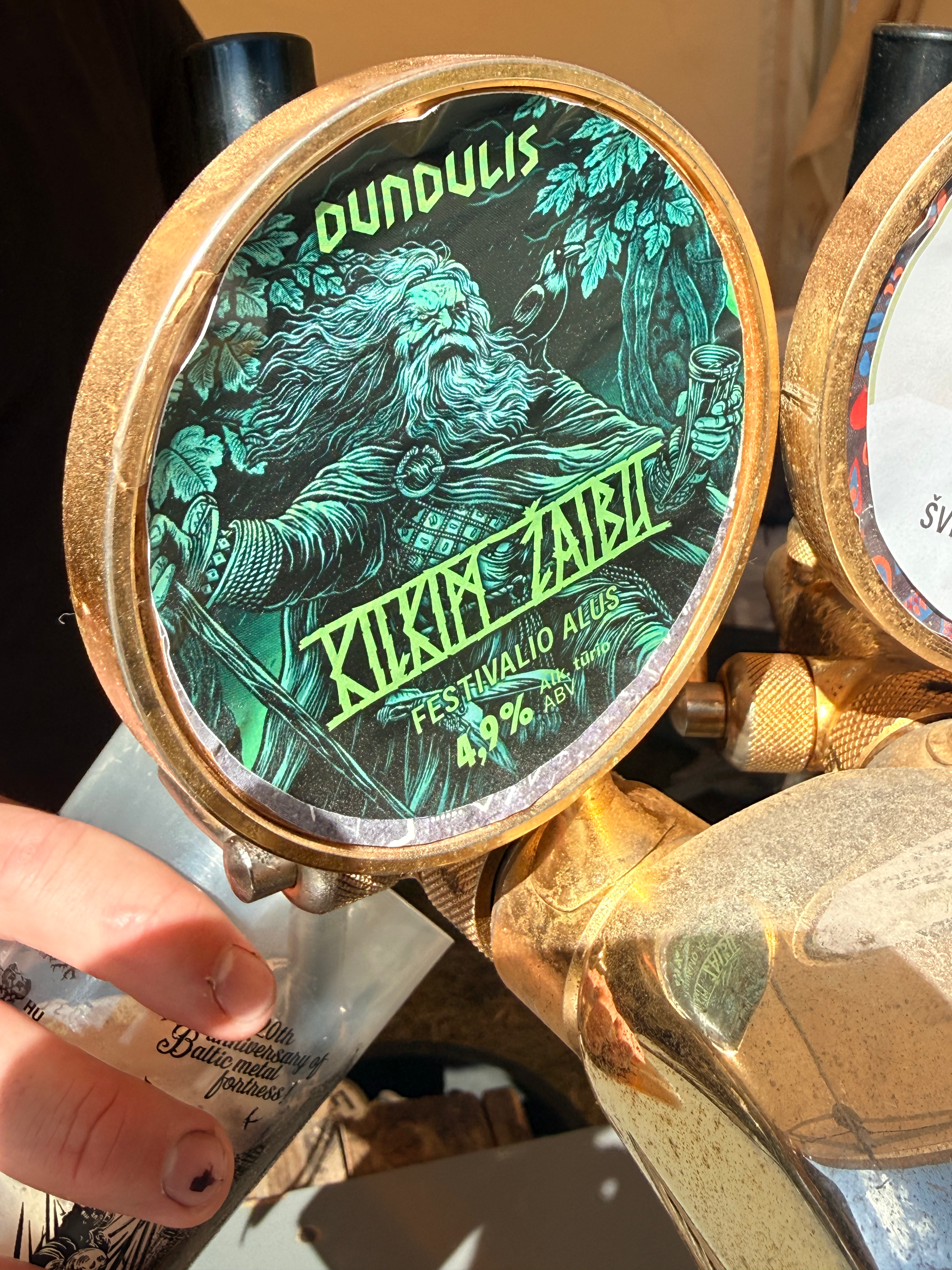
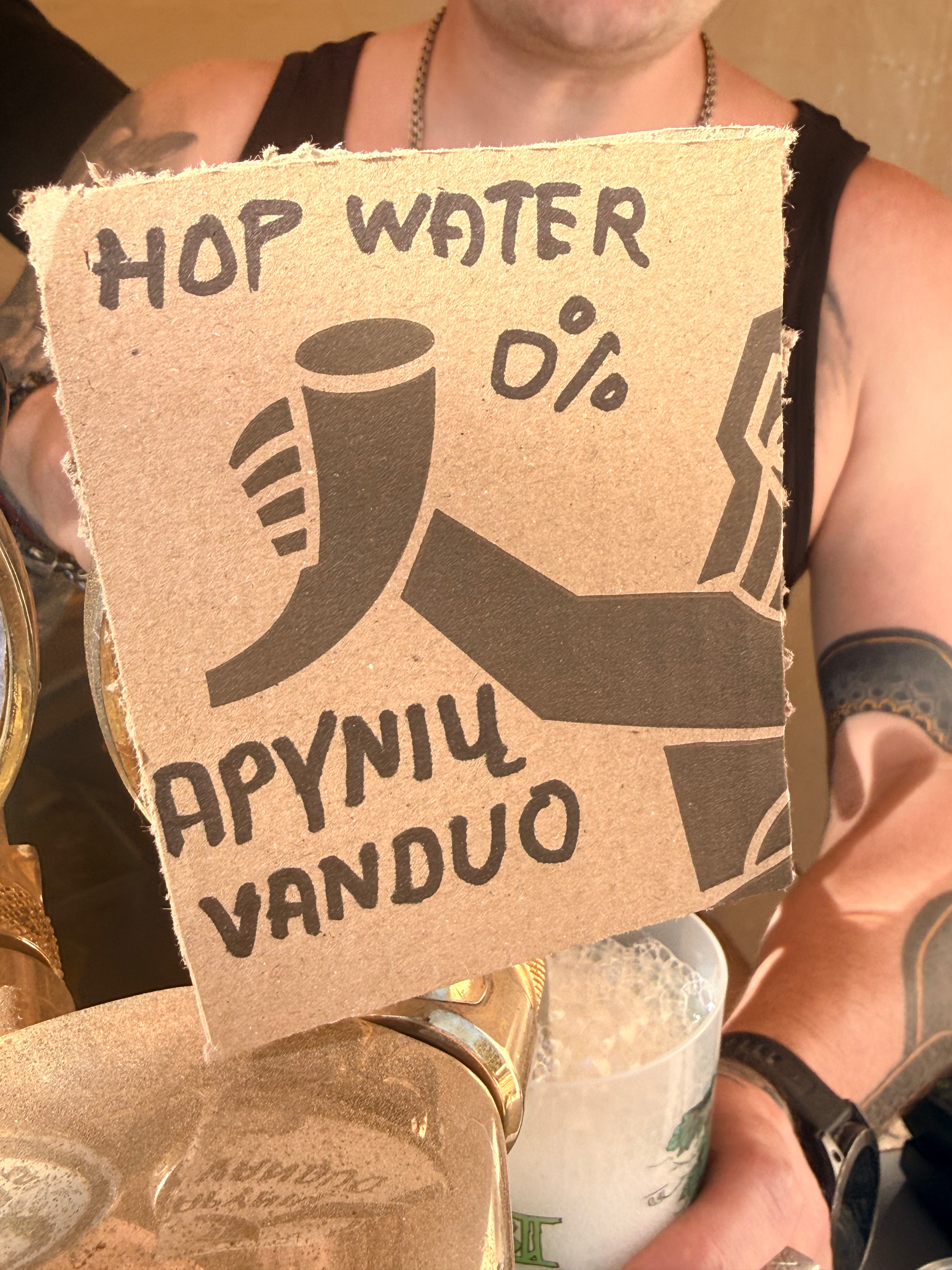
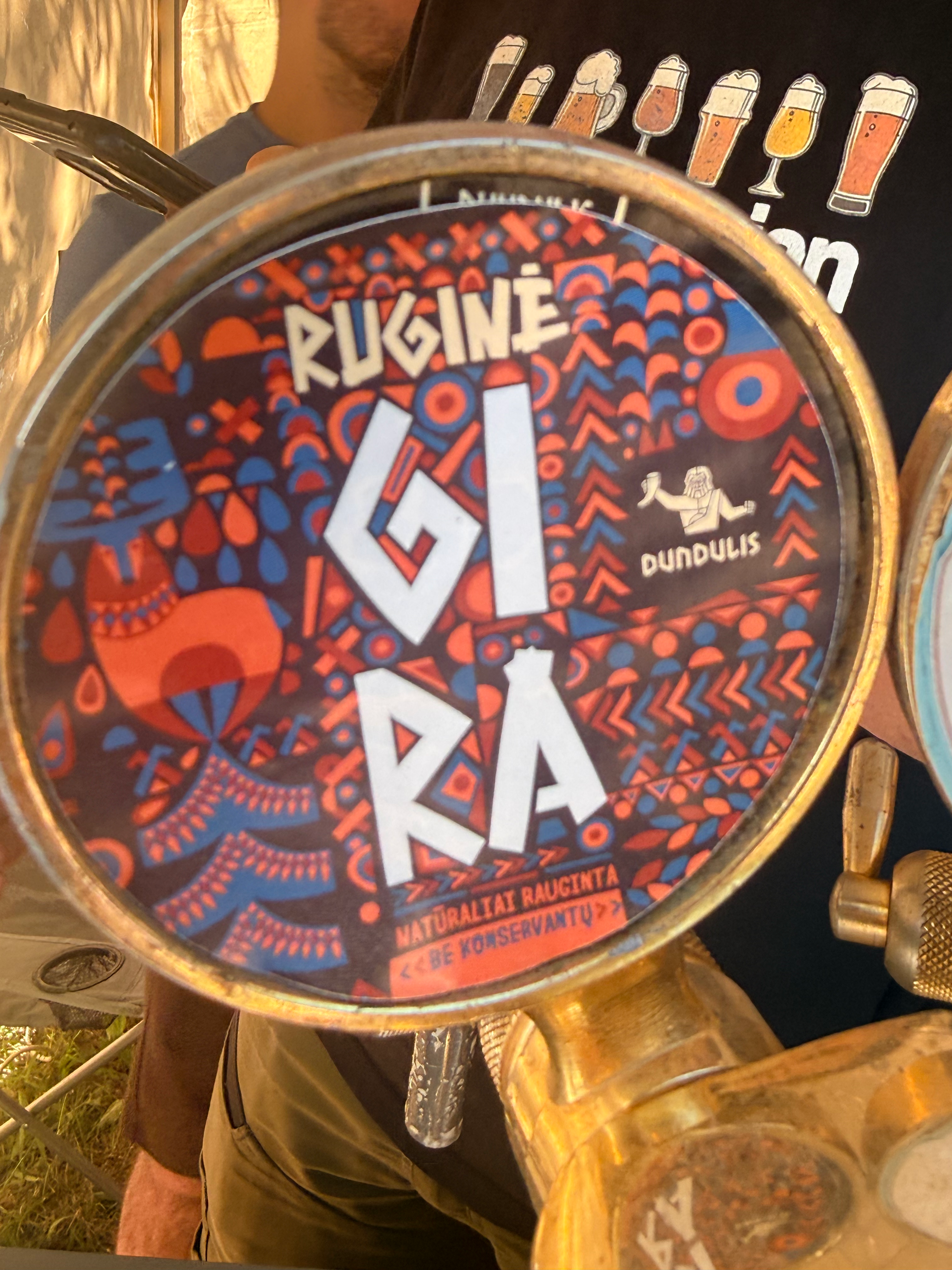
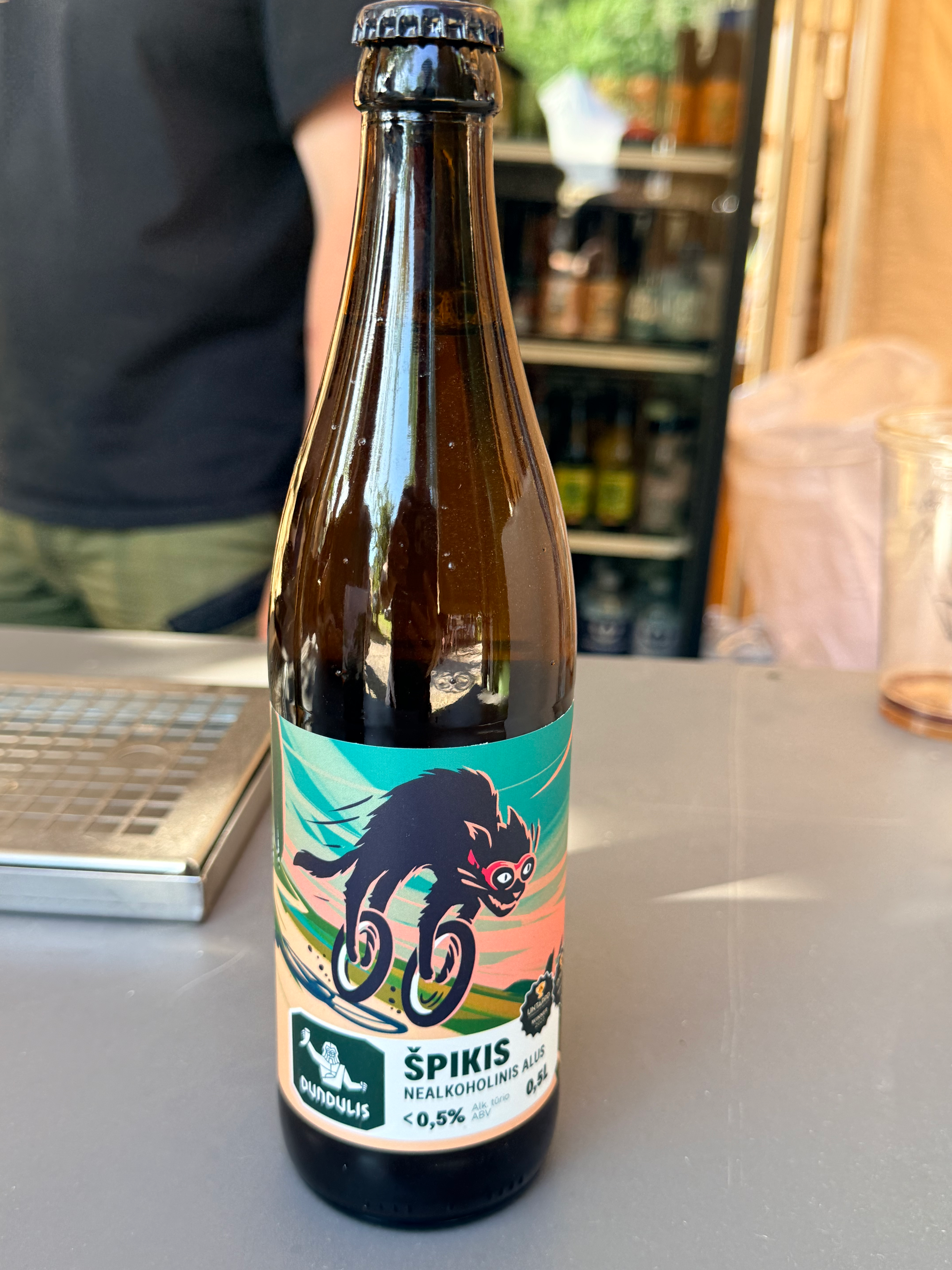
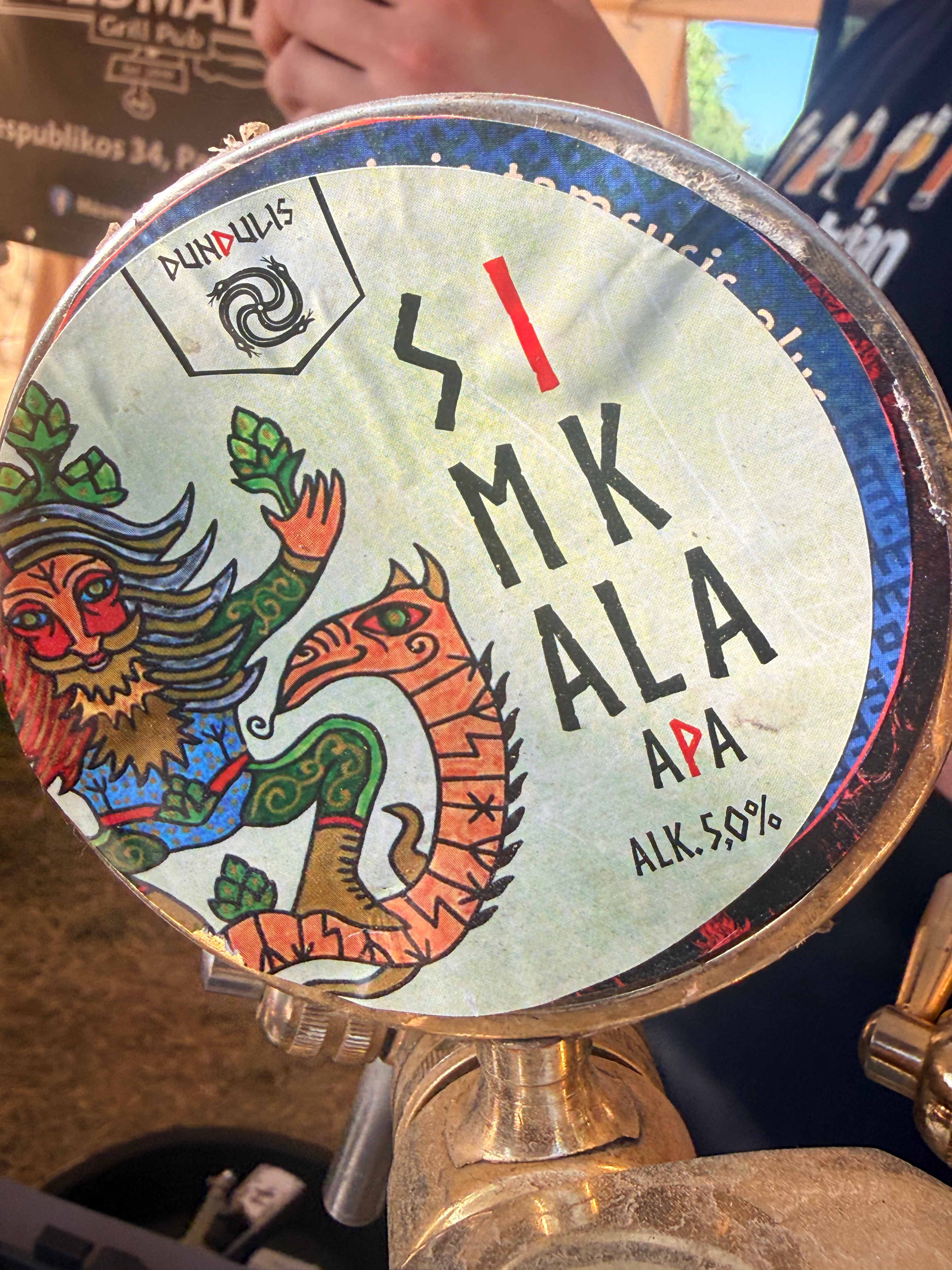
I was fortunate enough to meet Tomas Cesevičius and his son ( thank you for translating) while they were pouring beers. They poured me several beer styles to try for free!), all very tasty in their own ways . However, one of their brews stood out from the rest in a unique way: The Hop Water. A non-alcoholic drink that is somehow like a "hoppy" tonic; refreshing on a hot and a great alternative to the usual non-alcoholic beers.
Dundulis is important because it does not make Lithuanian beer seem quaint. It makes it feel alive, weird, local, and strong. The brewery’s catalog is broad enough for modern craft drinkers, but its deeper identity comes from keptinis, gruit, stone beer, wild fruit, herbs, and old rural knowledge.
In a global beer market where many breweries chase the same trends, Dundulis offers something more valuable: a sense of place. Its beers taste like a brewery digging through local history, pulling out forgotten tools, and turning them back on with the volume up.

Lake Lėnas, Kept Clean
One thing worth noting for anyone who hasn't been: Kilkim Žaibu was the first festival in Lithuania to introduce reusable cups, a move the organizers credit with meaningfully cutting single-use plastic waste — and the cups have become popular enough as merchandise that attendees keep using them well after the festival ends. Combined with designated camping areas, guarded parking kept separate from the campsites, restricted vehicle access on festival grounds, and active waste collection throughout the event rather than just after it, the grounds around Lake Lėnas stayed in noticeably good shape for a festival running multiple days and pulling thousands of people to a lakeside site.

Collector Cups: Cool and good for the environment. The US is behind on this concept....


Full Q&A: Kilkim Žaibu Media
The following is the complete exchange conducted with the Kilkim Žaibu media team ahead of the festival, provided in full.
Fermented Metal: Kilkim Žaibu describes itself as both a Baltic-culture and extreme-music festival. When programming the event, which part comes first, or are they developed together?
Kilkim Žaibu media: Baltic culture and extreme music are two dimensions of the festival that have always been developed simultaneously rather than sequentially. Baltic identity has been the conceptual foundation of Kilkim Žaibu from the very beginning. In the early years of the festival, paganism, Baltic culture, and historical reconstruction were especially important both to the organizers and to the audience, as these interests reflected the identity and values of the community that created the festival in the first place.
At the same time, the festival itself originally grew out of a musical scene centered around Pagan, Folk, and Black Metal. Over the years, however, Kilkim Žaibu has evolved into a much more diverse and versatile event. While its cultural roots remain deeply embedded in the festival's identity, today the musical side is better defined by the broader concept of extreme music, which more accurately reflects what happens on stage. In that sense, extreme music has become the contemporary expression of the same identity and cultural values that have always been at the heart of the festival, making both elements inseparable parts of the overall experience.
Fermented Metal: How do you decide the proportion of Lithuanian, Latvian, Estonian and international artists?
Kilkim Žaibu media: When selecting artists, we primarily invite bands that resonate with us as organizers and that we believe fit the overall spirit of the festival. At the same time, we place special importance on supporting and providing a stage for artists from the Baltic region, particularly bands from Lithuania, Latvia, and Estonia.
That said, we do not follow any predetermined proportion between these three countries. Instead, our booking decisions are made organically each year based on several factors: we look at which bands have recently released new music, which artists are actively touring, and which performers have built a strong connection with our audience over time.
Fermented Metal: What criteria distinguish an authentic cultural presentation from something that merely uses pagan or Viking imagery for entertainment?
Kilkim Žaibu media:
What distinguishes Kilkim Žaibu from more commercial Viking-themed festivals is our consistent focus on authentic Baltic ethnocultural heritage rather than on generalized “pagan aesthetics” used simply for entertainment. As I mentioned earlier, Baltic identity has always been a fundamental part of the festival itself — not only for the organizers, but also for many of the musicians we invite and for the audience that gathers here every year.
This connection goes far beyond visual symbolism or performative imagery. In Lithuania especially, preserving cultural identity carries particular significance. As a nation, we have experienced many historical hardships, both in the past and in the present, which has made us deeply aware of how important it is to protect, preserve, and value our own heritage. For us, it is not about “playing Viking cosplay” — it is about celebrating and sustaining a living connection to Baltic identity and traditions.
Fermented Metal: Who advises the festival on the historical accuracy of its ceremonies, crafts, clothing and warfare demonstrations?
Kilkim Žaibu media:
The historical and cultural authenticity of the festival is shaped directly by the communities and practitioners who take part in it. Lithuanian historical reenactment groups, traditional craftspeople, and Baltic pagan cultural practitioners all participate in the festival and are responsible for creating and developing the cultural program themselves.
Fermented Metal:: How many people are involved in staging the event, including paid workers, volunteers, security personnel, craftspeople and reenactors?
Kilkim Žaibu media:
Kilkim Žaibu is built on passion rather than commercial motivation. We do not have paid workers in the traditional sense — the festival is created by people who genuinely believe in the idea behind it, and all revenue goes directly back into the event itself: bringing bands to Lithuania, building stages, ensuring security, improving infrastructure, and providing the best possible experience for our audience.
We place particular emphasis on production quality, especially when it comes to the music program. Kilkim Žaibu is known for hosting one of the most powerful festival stages in the region, with high-level sound production and impressive lighting, because we want extreme music fans to experience performances at the highest standard possible.
In terms of the people involved, around 120 organizers and volunteers work directly on making the festival happen. In addition, approximately 300 craftspeople, historical reenactors, and cultural participants contribute to the cultural side of the event, while around 50 media representatives also take part each year. Overall, from the smallest behind-the-scenes contribution to the largest organizational responsibilities, it takes close to 500 people working together to bring Kilkim Žaibu to life.
Fermented Metal: What is the festival's attendance capacity, and what is the typical proportion of international visitors compared with Lithuanian attendees?
Kilkim Žaibu media:
Festival attendance varies from year to year, but typically Kilkim Žaibu welcomes between 4,000 and 7,000 attendees. One thing that consistently stands out is the relatively high number of international visitors, especially when compared to other events in Lithuania. While we do not track exact statistics, we estimate that approximately 20–30% of our audience comes from abroad.
Our international visitors primarily travel from neighboring Baltic countries such as Latvia and Estonia, but we also regularly welcome guests from Poland, Finland, Germany, and Scandinavia and others. We believe our strong niche reputation plays a significant role in attracting this international audience.
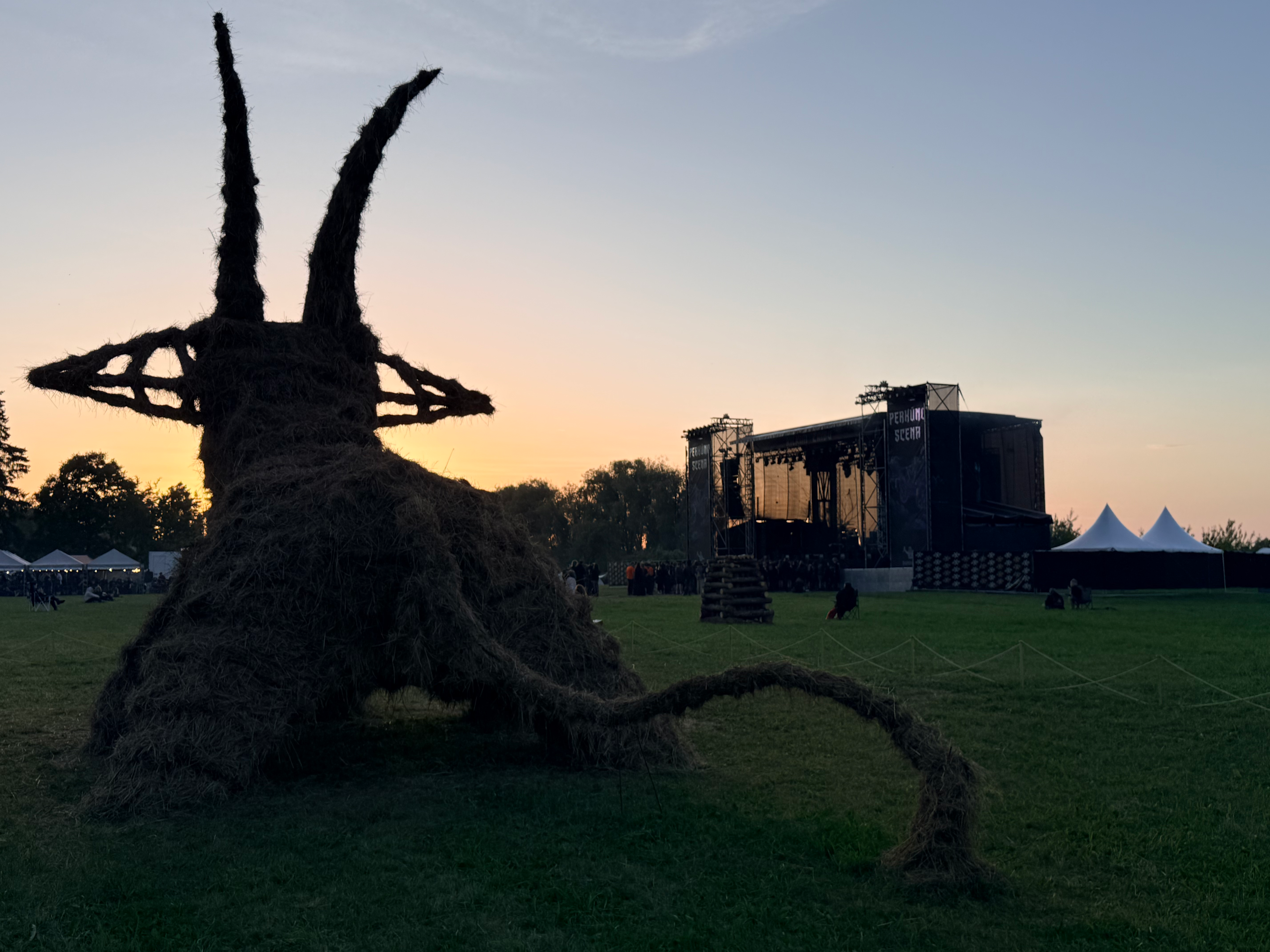
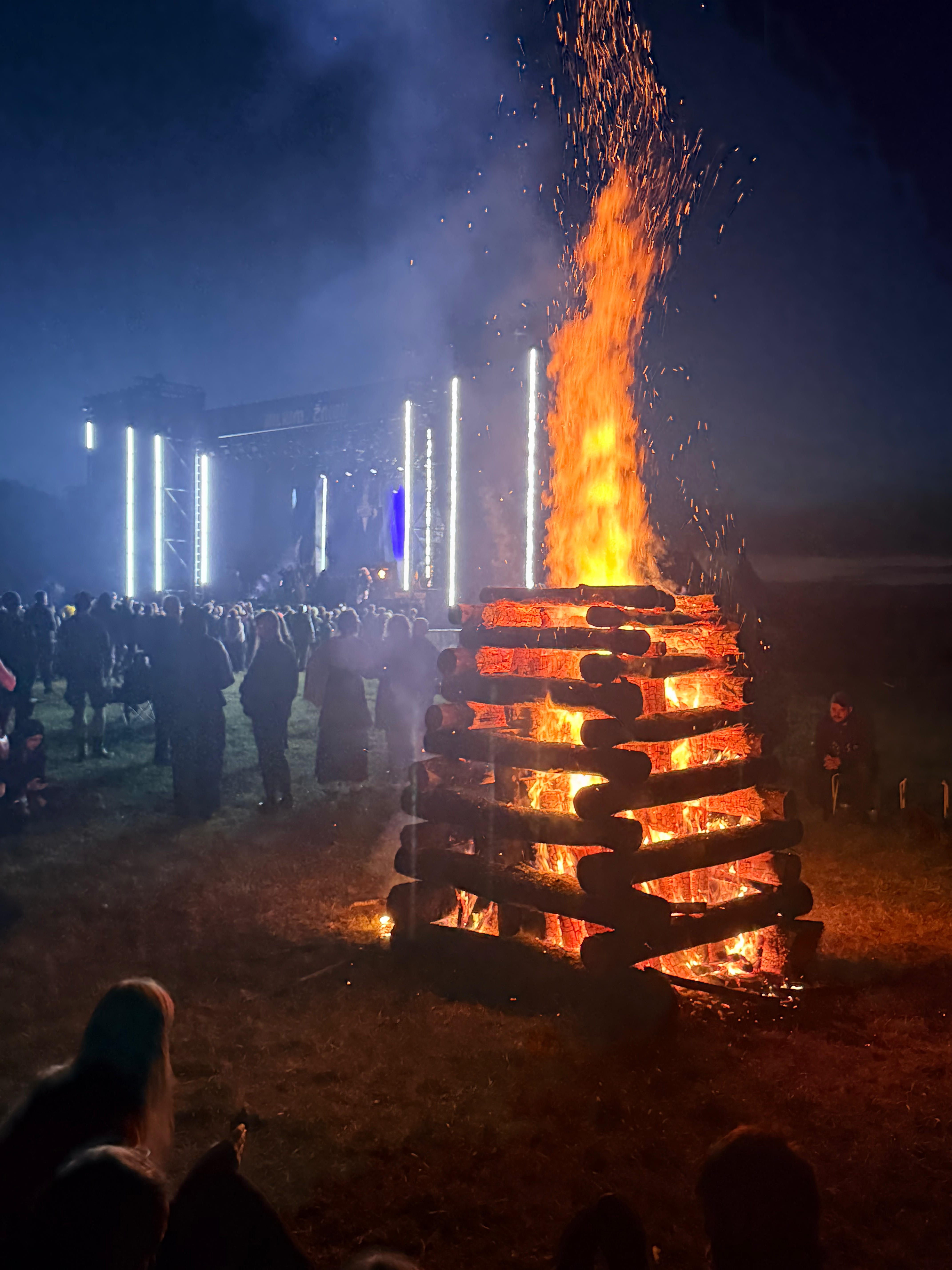
Over the years, Kilkim Žaibu has become known for its authenticity and for offering something quite unique within the European festival scene. Visitors are drawn not only by the music, but also by the festival's scenic natural location, its distinctive atmosphere, the large artistic bonfire sculptures that have become one of our visual signatures, and the warm sense of community that defines the overall experience.
Fermented Metal:How does the festival's relationship with the Antanas Smetona Manor Museum influence the event?
Kilkim Žaibu media:
We believe we have found a truly authentic and perfect location for Kilkim Žaibu. Being welcomed at the Antanas Smetona Manor Museum means a lot to us, and we deeply appreciate the openness and trust we have received there.
As a community built around extreme music — a scene that is often misunderstood by wider society — it feels especially meaningful to experience such genuine acceptance and support. We have also built a great relationship with the wider Ukmergė District community and are proud that the festival helps contribute to tourism and brings international attention to the region. Overall, we can speak only positively about this partnership.
Fermented Metal:What measures are taken to protect Lake Lėnas and the surrounding grounds from waste, vehicle traffic and campsite damage?
Kilkim Žaibu media: First of all, a lot of credit goes to our audience. Kilkim Žaibu attracts one of the cleanest festival communities we have encountered, and that makes a significant difference when it comes to protecting the environment.
In addition, we take several practical measures to minimize our impact on the surroundings of Lake Lėnas. These include designated camping areas, guarded parking separated from campsites to prevent uncontrolled vehicle movement on the grasslands, restricted vehicle access within the festival grounds, and an active waste management. We are also proud to have been the first festival in Lithuania to introduce reusable cups, helping significantly reduce single-use plastic waste. Interestingly, the reusable cups have also become one of our most popular pieces of festival merchandise. Many visitors collect them and continue using them throughout the year — at home, on camping trips, and in everyday life. We are committed not only to thoroughly cleaning the area after the festival, but also to actively collecting waste throughout the event itself in order to preserve the natural environment and leave the site in the best possible condition.
Fermented Metal: What modern and traditional Lithuanian beverages, alcoholic or otherwise, will be served?
Kilkim Žaibu media:
The main festival beverage is beer. The primary partners are Dundulis and Pilialaukis, both representing Lithuania's strong and fast-growing craft beer culture.
Dundulis is widely known for its experimental yet tradition-rooted approach to brewing. The brewery works with a broad spectrum of styles — from modern IPAs and APAs to darker, more complex beers and interpretations inspired by historical or farmhouse brewing traditions. Their focus is on characterful, unfiltered beers that highlight ingredients and craftsmanship rather than industrial uniformity.
Pilialaukis complements this with a strong selection of accessible but carefully crafted beers, ranging from lagers and wheat beers to ales and darker styles. The brand is appreciated for combining solid brewing fundamentals with a distinctly Lithuanian craft identity, making it a natural fit for the festival atmosphere.
Together, these breweries will offer a wide selection of styles — ales, IPAs, APAs, wheat beers, lagers, and dark beers — giving visitors the opportunity to explore a broad range of contemporary Lithuanian craft brewing throughout the festival.


