
Hearing Loss: The Concert Injury You May Not Notice Until It’s Too Late

You can recover from the hangover. Your hearing may not be so forgiving....
For metal fans, volume is part of the experience. A kick drum should hit you in the chest. A wall of guitars should feel like a wall of guitars. And when the house lights drop and the guitars start to roar, almost nobody wants to think about occupational-health standards.
![Never underestimate the power of the Marshall stack... [Joel O'Keeffe of Airborne]](https://static.wixstatic.com/media/a8c64c_3e4b8f057b9c40a28612b22d25fae9ac~mv2.jpg/v1/fill/w_980,h_607,al_c,q_85,usm_0.66_1.00_0.01,enc_avif,quality_auto/a8c64c_3e4b8f057b9c40a28612b22d25fae9ac~mv2.jpg)
Unfortunately, your inner ear does not care whether that 105-decibel assault is a jackhammer or Judas Priest.
Rock concerts, clubs and sporting events commonly reach levels capable of damaging hearing. The National Institute on Deafness and Other Communication Disorders estimates amplified concerts can fall roughly in the 94–110 dBA range, while another NIDCD educational resource puts rock concerts, parties and nightclubs at approximately 95–115 dB.
That puts an ordinary night of live music well into territory where hearing protection deserves to be treated like part of your concert gear rather than an accessory for people who are “too old for loud music.”
The Problem Isn't Just How Loud It Is
Noise-induced hearing loss, or NIHL, occurs when excessively loud sound damages structures inside the inner ear. It can result from one extremely intense sound or from accumulated exposure over months and years.

The important variables are volume, duration and frequency of exposure.
According to NIDCD, long or repeated exposure at or above approximately 85 dBA can cause hearing loss. As the volume rises, the amount of potentially safe exposure time drops dramatically. NIDCD gives examples of about eight hours at 85 dBA, roughly 14 minutes at 100 dBA and only about two minutes at 110 dBA.
The important variables are volume, duration and frequency of exposure.
According to NIDCD, long or repeated exposure at or above approximately 85 dBA can cause hearing loss. As the volume rises, the amount of potentially safe exposure time drops dramatically. NIDCD gives examples of about eight hours at 85 dBA, roughly 14 minutes at 100 dBA and only about two minutes at 110 dBA.
The World Health Organization uses a slightly different safe-listening framework but arrives at the same basic conclusion: louder music means dramatically less safe listening time. WHO's guidance estimates a weekly safe-listening allowance of around 40 hours at 80 dB, four hours at 90 dB, 20 minutes at 100 dB, eight minutes at 105 dB and roughly two and a half minutes at 110 dB.
Sound level | WHO safe-listening guidance |
|---|---|
80 dB | 40 hours per week |
85 dB | 12 hr. 30 min. per week |
90 dB | 4 hours per week |
95 dB | 1 hr. 15 min. per week |
100 dB | 20 min. per week |
105 dB | 8 min. per week |
110 dB | 2.5 min. per week |
Those numbers shouldn't be interpreted as a stopwatch guaranteeing that damage occurs at one second beyond the stated limit—or that everyone has identical susceptibility. They illustrate how rapidly risk increases as sound intensity rises.
That Ringing After the Show Isn't a Badge of Honor
Metal fans know the sensation.
You leave the venue, get into the car and suddenly everything sounds strangely muted. Conversation seems distant. Then comes the high-pitched ringing.
That's tinnitus, and although temporary ringing can disappear after a loud show, it should not be considered harmless evidence that the concert was sufficiently heavy.
WHO explains that loud sound can fatigue sensory cells in the inner ear, producing temporary hearing loss or tinnitus. Sometimes they recover. With repeated or prolonged exposure, however, structures inside the ear can become permanently damaged, leading to irreversible NIHL, chronic tinnitus or both.
NIDCD makes another point worth remembering: humans cannot simply regenerate damaged inner-ear hair cells. Once significant noise-related hearing has been lost, it may be permanent.
For somebody who attends one show every few months, that matters.
For the photographer, promoter, bartender, security worker, roadie, musician—or metal writer standing next to the stage several nights every month—it matters considerably more.
So What Should a Concertgoer Do?
The simplest answer is also the cheapest: wear earplugs.
But that doesn't necessarily mean stuffing your ears with the disposable foam cylinders you find next to industrial safety glasses at the hardware store.
Standard foam earplugs can provide excellent protection when correctly fitted and can be the right choice when maximum attenuation is more important than sound fidelity. The drawback at a concert is that conventional plugs often reduce high and mid frequencies differently than lower frequencies. Music can therefore become muddy, muffled or bass-heavy.
That's why high-fidelity or “musician's” earplugs have become particularly useful for concertgoers.
Instead of merely blocking as much sound as possible, filtered plugs attempt to lower the overall level while maintaining a more balanced frequency response. The goal isn't to make Iron Maiden sound like they're playing through the apartment wall.
It's to make Iron Maiden sound like Iron Maiden—only quieter.
Concert Earplugs Worth Knowing About
Etymotic ER20XS
Etymotic was one of the pioneers of filtered musician hearing protection. Its reusable ER20XS uses a triple-flange design and is designed to provide relatively even attenuation while preserving speech and music clarity. Etymotic lists an NRR of 13 dB and an SNR of 17 dB for the ER20XS; its product materials describe approximately 20 dB of equal sound reduction under appropriate conditions. Correct fit is critical to achieving that protection.

Loop Experience 2

Loop's Experience 2 is aimed squarely at concerts, festivals and other live events. It uses interchangeable silicone tips and an acoustic channel/filter arrangement intended to reduce volume while maintaining music clarity.
Loop rates the Experience 2 at 17 dB SNR / 12 dB NRR, and the plugs are certified as hearing protection under applicable U.S. and European standards.
Alpine MusicSafe Pro
The MusicSafe Pro offers an interesting advantage for musicians and frequent concertgoers: interchangeable attenuation filters.
Alpine supplies three filter sets rated at approximately 16, 19 and 22 dB, letting the wearer choose more or less attenuation depending upon the environment.

Eargasm High Fidelity

Eargasm High Fidelity Earplugs are another popular reusable filtered option designed for concerts and festivals. The company also offers higher-attenuation filters for especially loud environments.
FYI: Fermented Metal is not sponsored by, or getting any sort of kickbacks from, the companies listed above. We just want to provide some examples of products we could all be using at the next Sunn O))) concert.
Don't Ignore Cheap Foam Earplugs
There's also nothing wrong with the humble foam plug.
NIDCD specifically recognizes formable foam earplugs as legitimate hearing protectors, along with premolded plugs, canal caps and earmuffs.
A properly inserted foam plug offering substantial NRR protection is far preferable to an expensive “audiophile” plug that doesn't fit correctly—or no protection at all.
For the habitual concertgoer, keeping a spare pair of foam plugs in the car, jacket, camera bag or battle jacket is probably one of the cheapest insurance policies available.
Fit Matters More Than the Logo
An earplug's laboratory attenuation rating does not automatically equal the protection you'll receive in a club. If the plug doesn't form an effective seal, attenuation drops.
Experiment with tip sizes before the show rather than halfway through the headliner's set. If universal-fit plugs repeatedly feel loose, painful or ineffective, frequent concertgoers and musicians may want to investigate custom-molded musician earplugs, which an audiologist can fit to the individual ear and equip with replaceable acoustic filters.

Where You Stand Matters Too
Earplugs aren't the only defense.
WHO recommends moving away from loudspeakers, taking breaks from noisy environments and using quiet areas whenever possible. Its guidance suggests taking approximately 10 minutes of quiet after every hour in a loud concert or club environment.
This is especially relevant in smaller metal clubs, where standing directly in front of the PA can expose you to considerably greater sound levels than watching from farther back.
The front rail may produce better photographs. It doesn't necessarily produce better hearing.
There's an App for That
iPhone users have another useful tool: the NIOSH Sound Level Meter app, developed by the National Institute for Occupational Safety and Health.
A phone isn't a substitute for calibrated professional sound-monitoring equipment, but it can be extremely educational. If the meter is consistently showing readings around 100 dBA and you're planning to remain in the room for another three hours, you've learned something important.
Put the plugs in.

The Venue Has a Role Too
Hearing protection shouldn't necessarily be left entirely to the audience.
WHO's Global Standard for Safe Listening Venues and Events recommends six practices for amplified-music venues, including monitoring sound levels, optimizing acoustics, providing quiet zones and making personal hearing protection available to audiences.
Minneapolis: Free Earplugs by Law
Minneapolis provides perhaps the clearest American example.
The city's code states that qualifying Class A and B establishments offering general entertainment must make hearing-protection devices available free of charge to patrons and employees, provided a designated supplier is available to furnish them. Those disposable plugs must carry an NRR of at least 12 dB.
Washington, D.C.'s Black Cat
At Black Cat, the long-running Washington, D.C. alternative-music venue, the practice appears considerably less bureaucratic.
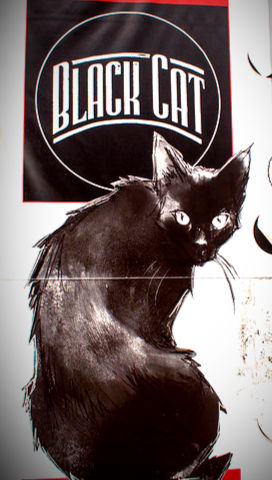
In a 2025 Washingtonian feature, a reporter described arriving at a show without hearing protection and having a bartender provide a free pair of earplugs with a warning to protect his hearing.
Policies can change, though, so concertgoers shouldn't assume plugs will be free—or even available—at every venue. Bring your own and consider venue-provided disposables the emergency backup.
Maybe Free Earplugs Should Be as Normal as Free Water?
For decades, temporary hearing loss was almost incorporated into rock culture. You went to the show. You stood near the speakers. Your ears rang until lunchtime the next day. Apparently, that meant it was a great night.
We know better now.
None of this requires turning metal concerts into quiet listening rooms. WHO's safe-listening standard is specifically designed around the idea that amplified music can remain powerful while venues and audiences reduce unnecessary hearing risk.
Hearing protection has also become much better at preserving the character of live music than the old stereotype suggests.
So keep a pair attached to your keys. Put another in the camera bag. Bring a disposable backup for the friend who forgot theirs.
Because the best argument for protecting your hearing isn't that concerts are too loud.
It's that you want to keep going to them for another thirty years.

Fermented Metal's “Hangovers and Hearing Loss” covers some of the less glamorous realities surrounding heavy music and drinking culture. This article is informational and isn't a substitute for evaluation by an audiologist or medical professional. Persistent tinnitus, muffled hearing, sudden hearing loss or difficulty understanding speech should be evaluated by a qualified healthcare professional.


Comments