
The Studio Under the Radiator: How Munich Helped Build Heavy Metal Without a Scene of Its Own

Munich never produced a "Big Four" thrash band the way Essen, Gelsenkirchen, and Weil am Rhein did. But a cramped basement recording studio, a trio of underappreciated homegrown acts, and a run of stadium-sized festivals gave the Bavarian capital an outsized role in the genre's history anyway.
MUNICH, Germany — Ask a metal fan to name Germany's great metal cities and the list writes itself before Munich gets a mention: Gelsenkirchen gave the world Sodom, Essen gave it Kreator, Weil am Rhein gave it Destruction. Munich, more associated with beer tents and BMW than distorted guitars, doesn't fit the mythology of the country's thrash-metal "Big Four." And yet some of the most important hard rock and metal records ever made were tracked in a converted hotel basement in the city's Bogenhausen district, homegrown bands here quietly built a 40-year lineage of their own, and the city's two biggest arenas have hosted a steady stream of the genre's biggest names — with a full slate more on the way this fall.

A Basement Under a Hotel's Boiler Room

Munich's real claim to metal history isn't a band — it's a studio. Musicland Studios was founded in the early 1970s by Italian producer Giorgio Moroder (later famous for his disco and film-score work) in the basement of the Arabella high-rise building. The original setup was modest: a 16-track recorder and a Helios mixing console, in a room engineer Reinhold "Mack" Reinelt later complained was "uncomfortably hot at all times" because it sat next to the building's central heating system. Using money from a Phonogram deal and royalties from the Chicory Tip hit "Son of My Father" (co-written by Moroder), the studio expanded in 1973; its first session in the new space was Marc Bolan and T. Rex's Zinc Alloy and the Hidden Riders of Tomorrow (1974).
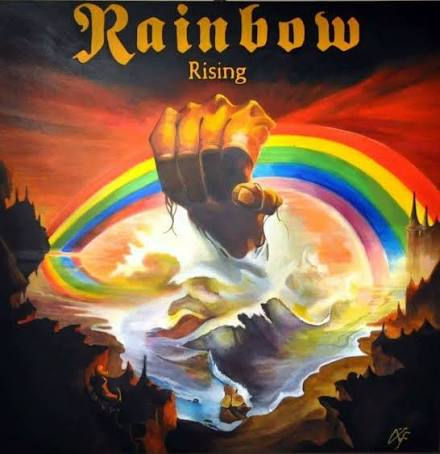
From there, Musicland became an unlikely engine room for hard rock's mid-1970s peak and metal's later arrival. Deep Purple tracked Stormbringer (1974) and Come Taste the Band (1975) there. Ritchie Blackmore, fresh off leaving Purple, recorded both Ritchie Blackmore's Rainbow (1975) and the classic Rising (1976) in the same rooms. Uriah Heep cut Wonderworld (1974) there, Scorpions (Hannover natives, not Munich locals) recorded Fly to the Rainbow (1974) there, and Led Zeppelin tracked Presence (1976) in the space as well. David Coverdale recorded his pre-Whitesnake solo album White Snake (1977) at Musicland, and returned years later to cut Whitesnake's Slide It In (1984) in the same building.
Mack, who'd started as an engineer, became a fixture of the studio's identity as it moved into the 1980s, co-producing Queen's The Game (1980) — home to "Another One Bites the Dust" and "Crazy Little Thing Called Love" — and Hot Space (1982); Queen even name-checked him in the lyrics to "Dragon Attack." The studio's most significant metal session came right near the end of its life: Iron Maiden spent February and March of 1988 at Musicland with producer Martin Birch, recording Seventh Son of a Seventh Son — the album that gave the band "Can I Play with Madness" and "The Evil That Men Do," and one of the most acclaimed records of their catalog.
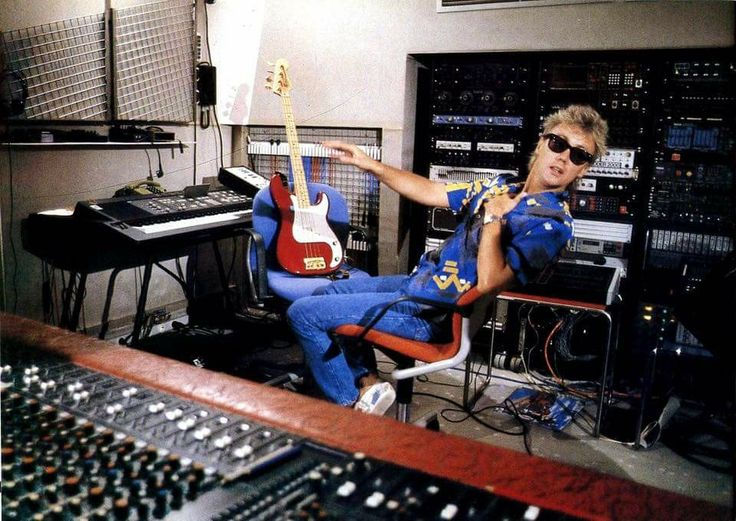
Musicland closed around 1990. The commonly repeated explanation is that noise from construction on Munich's U4 subway line made the basement unusable for recording; Mack has since disputed that account, telling Bavarian radio in 2025 that it was actually a rent increase of nearly 100 percent that killed the studio, not the trains. Either way, a building most Münchners still just think of as an apartment high-rise quietly hosted the recording of some of metal and hard rock's most enduring albums.
Three Bands Munich Can Actually Call Its Own
Munich's homegrown metal lineage is thinner than the Ruhr Valley's, but it's real, and it spans four decades.
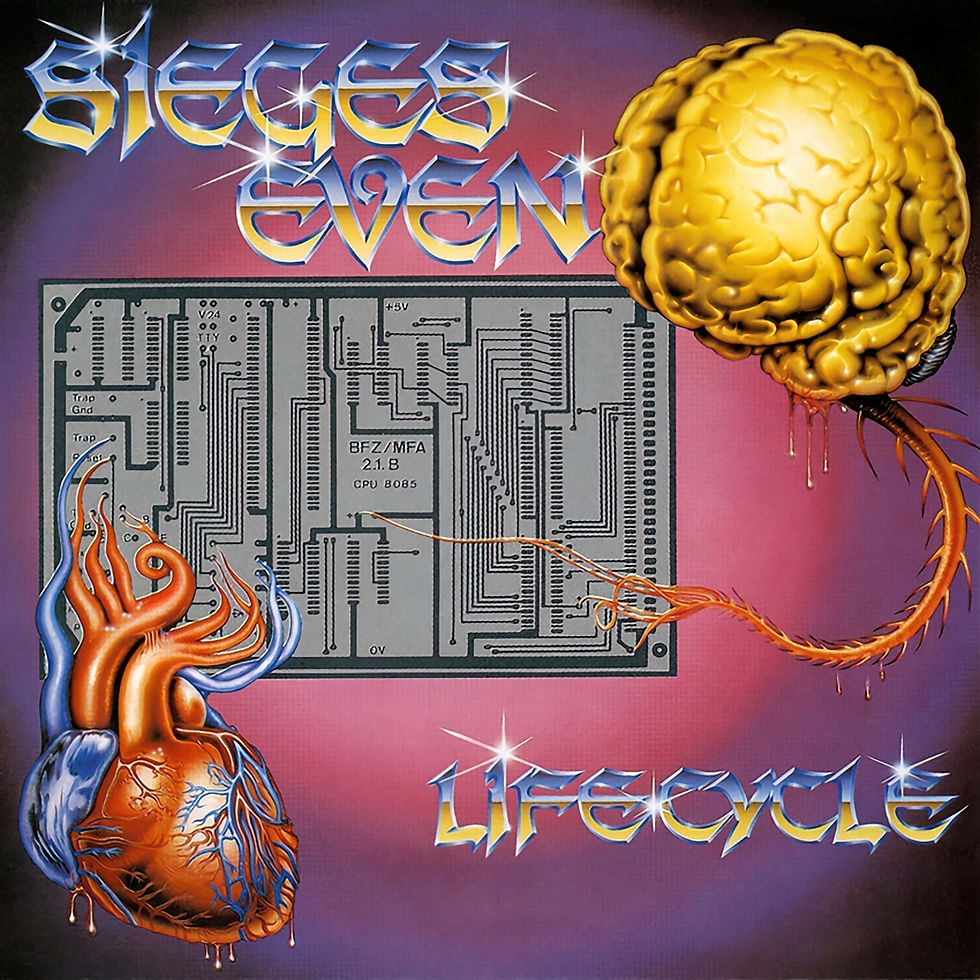
The earliest is Sieges Even, a progressive metal band that formed in Munich in the early 1980s — under the name Sodom, coincidentally, several years before the far more famous Gelsenkirchen thrash band of the same name existed — before renaming themselves Sieges Even in 1985. Active from 1982 to 1997 and again from 1999 to 2008, the band moved from early thrash influences into ambitious progressive metal territory across albums like Life Cycle (1988), Steps (1990), and A Sense of Change (1991), later returning with The Art of Navigating by the Stars (2005) and Paramount (2007) before splitting over internal differences.
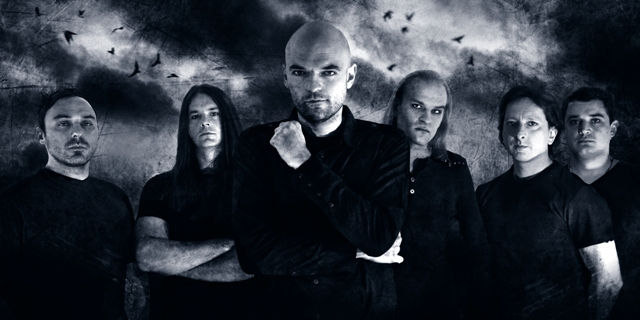
Darkseed picked up the city's flag in the 1990s. Formed in Munich in 1992 around vocalist Stefan Hertrich, drummer (later co-vocalist) Harald Winkler, and guitarists Thomas Herrmann and Tom Gilcher, the band started in death metal before shifting toward a more atmospheric, gothic metal sound with Midnight Solemnly Dance (1996). The follow-up, Spellcraft (1997), and later Diving into Darkness (2000) drew strong reviews within the gothic metal scene. Darkseed released Ultimate Darkness in 2005, broke up in 2006, reunited in 2008, and has been on hiatus since 2014.
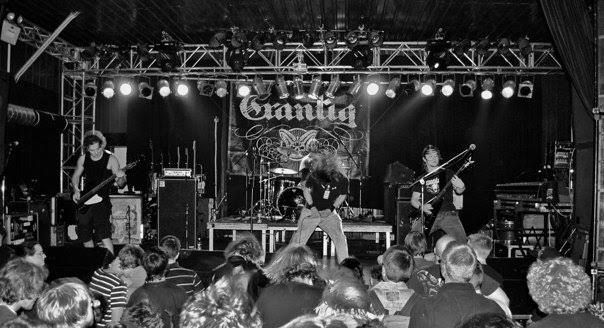
The most recent name is Grantig, a Munich thrash metal band formed in 2004 that folded southern rock, blues, hardcore, and jazz influences into its sound and sang entirely in German — the band's name is south German dialect for "grouchy" or "grumpy." After two independently released demos, Grantig signed to Drakkar Entertainment and released So Muss Es Sein in February 2008, followed by Medizin in 2009. The band opened German tour dates for Sacred Reich and Suicidal Tendencies before disbanding in 2011 with a planned third album never finished.
When the Genre's Biggest Names Came to Town
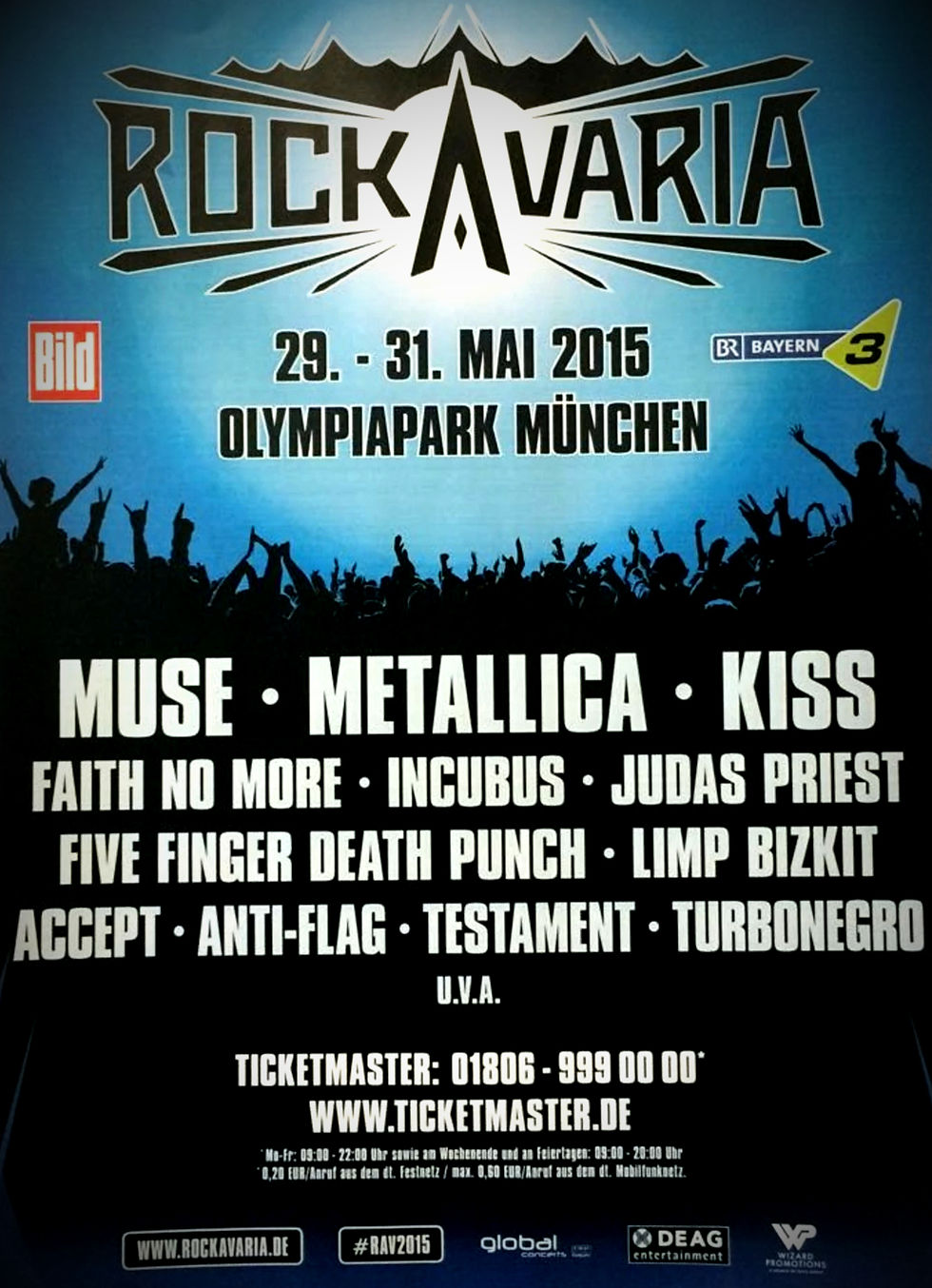
If Munich's homegrown scene stayed modest, the city's venues more than made up for it by hosting the biggest names in the genre. The clearest evidence is Rockavaria, a metal and rock festival that took over the Olympiapark grounds — including the 55,000-capacity Olympiastadion — for two editions in the mid-2010s. The first, held May 29–31, 2015, was headlined by Muse, Metallica, and KISS, with a bill that also included Faith No More, Judas Priest, Five Finger Death Punch, and Limp Bizkit. The second, on May 27–29, 2016, went even heavier: Iron Maiden, Nightwish, Iggy Pop, and Slayer headlined, backed by Anthrax, Sabaton, and In Extremo. There's a nice symmetry in that second edition — Iron Maiden closing out an Olympiapark stage twenty-eight years after quietly recording Seventh Son of a Seventh Son a few kilometers away in the Musicland basement. Rockavaria was cancelled in 2017, returned in a scaled-back, relocated form at Königsplatz in June 2018 with roughly twenty shows across two stages, and hasn't been held since.
Beyond the festival, Munich's two main arenas — the Olympiahalle and Zenith, die Kulturhalle (a converted 1920s locomotive hall) — have functioned as the city's steady touring stops for arena-level metal acts for years, from Powerwolf's pyrotechnic-heavy Wolfsnächte tour date at the Olympiahalle in October 2024 to the wave of shows detailed below.
What's Coming Up
Munich's fall 2026 concert calendar is unusually stacked for heavy music. Highlights on the books over the next two months include:
Evanescence, with Poppy and Nova Twins, at Olympiahalle München on September 26
Jinjer, with Spiritbox, at Zenith on September 29
Dimmu Borgir, with Behemoth and Dark Funeral, at Zenith on October 14 — a heavyweight extreme-metal bill in one night
Korn at Olympiahalle München on October 19
Amon Amarth, with Soilwork and Orbit Culture, at Zenith on November 8
Gloryhammer, with Majestica and Arion, at Backstage on November 13
Michael Schenker — the German guitarist behind early Scorpions and UFO — at Nachtwerk Club on November 13
Eluveitie at Kesselhaus on November 26
Songkick's listings show roughly sixty metal-tagged shows booked in Munich through the rest of 2026, a reminder that even without a scene to rival the Ruhr Valley's, the city remains one of European metal's busiest tour stops.


Comments