
Forbidden Comes Home: A Generational Bay Area Bill at the Great American Music Hall
Updated: Jun 4
By Fermented Metal Magazine staff — San Francisco, CA
The Bill
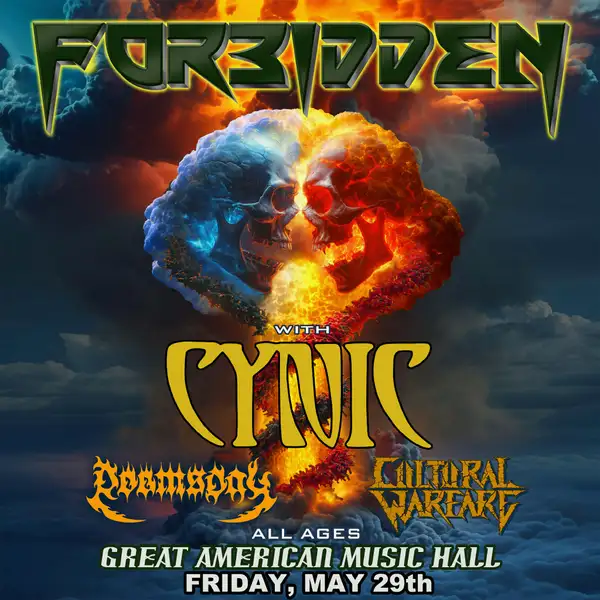
Forbidden — the band whose 1988 debut Forbidden Evil and 1990 follow-up Twisted into Form helped define the technical wing of Bay Area thrash — headlined the Great American Music Hall on Friday, May 29, 2026. Cynic played direct support. Oakland crossover/thrash outfit Doomsday went on second; Oakland thrash quartet Cultural Warfare opened. Doors 6, show 7, $40, 470-cap room on O’Farrell.
In shape, the bill reads less like a routine club date than a deliberately constructed map of where the West Coast end of extreme metal has been and where it is now: two Oakland bands climbing through their first record cycles, a Florida-origin progressive landmark that still has no comp, and a Bay Area thrash institution actively writing its first new album in fifteen years. Each set earned its slot on the bill for a different reason.
Cultural Warfare
Cultural Warfare opened. The Oakland quartet — vocalist Jacques Serrano and bassist Pete Aguilar (both ex-Taunted), guitarist Billy Garoutte, drummer Kevin Doughty — has been operating out of the East Bay since the mid-2010s and is touring on the long tail of its 2018 LP Warmageddon (M-Theory Audio).
The record was well-received in the modern thrash press: Metal Forces and Dead Rhetoric both placed it in the Testament/Defiance lineage, with reviewers pulling specifically on the Souls of Black–era production and Serrano’s range — equal parts rasp and clean tone, which is unusual in the modern Bay Area thrash field where most vocalists pick a lane and stay in it. Songs like “Witches Prayer” and “Shadow Priest” got the most specific notice. Live, that vocal flexibility is the differentiator: a 25-minute opening slot is a hard place to make any kind of impression, and Cultural Warfare’s hooks land faster than the genre average because Serrano isn’t burning the back row out on throat alone.
Putting them in the leadoff position on a Forbidden bill is also a piece of community signaling. Cultural Warfare’s whole identity is rooted in respecting and extending the lineage Forbidden helped establish in the 80s — the Metallica/Exodus/Death Angel/Testament/Forbidden/Vio-lence axis is named explicitly in their own bio. The perfect band to get the night off to the right start.
Doomsday
Doomsday second. Oakland’s Doomsday are one of the Bay Area’s sharpest modern crossover/thrash bands, carrying the region’s long-running thrash legacy into a heavier, hardcore-driven present. Formed in 2018 by musicians connected to different corners of the Bay Area metal and hardcore scene, the band quickly developed a reputation for fast, physical songs built on divebombing leads, gang vocals, metallic hardcore tension, and old-school thrash aggression.

Doomsday’s recorded path began with early singles and demos, including Agony Blossoms Fear // Soul Deprivation in 2021, Poisoned Disorder in 2021, and the Riff City Promo in 2022. Their wider breakthrough came with the 2022 EP Depictions of Chaos, released through Creator-Destructor Records. That record introduced the band’s core identity: a violent blend of Bay Area thrash, hardcore stomp, and influence from bands such as Slayer, Metallica, Sepultura, Iron Age, Power Trip, Nuclear Assault, and Exodus, but falling in with bands of the last decade such as Prowl, Inhuman Nature, Forced Neglect, and Necrot.
The band followed with a self-titled EP in 2023 before releasing its debut full-length, Never Known Peace, on March 28, 2025. Recorded, mixed, and mastered by Zack Ohren at Sharkbite Studios, the album tightened Doomsday’s sound into ten compact tracks of riff-heavy crossover, balancing high-speed thrash with pit-ready breakdowns and sharp lead work. The album also featured guest solos by Andrew Lee of Ripped to Shreds.


As of the Never Known Peace rollout, Doomsday’s lineup included Charlie D. on vocals, Eddie Vigil on drums, Ryan Calaveras on guitar, Glendon “G” Diaz on bass, and Robert “Big Rob” DeLorenzi on guitar. The band’s identity is rooted in both Oakland and the wider Bay Area tradition: heavy music that values riffs, live intensity, and community credibility over polish or trend-chasing.
For Fermented Metal readers, Doomsday represents the current Bay Area underground at its most direct: a band that understands the region’s thrash history but filters it through modern hardcore urgency. Their slogan-like phrase “Riff City” is more than a throwaway line; it neatly captures what the band does best — fast songs, heavy hooks, and a sound built for the floor.

That is exactly the slot they filled on Friday: a 30-ish-minute set built to translate a 30-minute LP, with the floor visibly thicker than it had been for the opener and the pit doing the kind of organized stomping that the band’s song reward. The connection to Forbidden is not abstract — both bands are now Sharkbite/Ohren projects, and putting Doomsday in the room where the headliner is currently tracking its comeback record reads as more than coincidence.

Cynic
Cynic in direct support. The Florida progressive-metal institution formed in Miami in 1987 around guitarist Paul Masvidal and drummer Sean Reinert, and broke wide with Focus (Roadrunner, September 14, 1993), the album that is, by broad critical consensus, one of the small handful of records that built the modern progressive-metal vocabulary. Fretless bass (Sean Malone), jazz-fusion drumming, vocoder-treated cleans alongside death-metal growls, atmospheric and harmonically literate guitar writing — Focus sounded like nothing else in 1993 and still doesn’t, and the through-line from it to almost every subsequent prog-death band of note is impossible to miss.

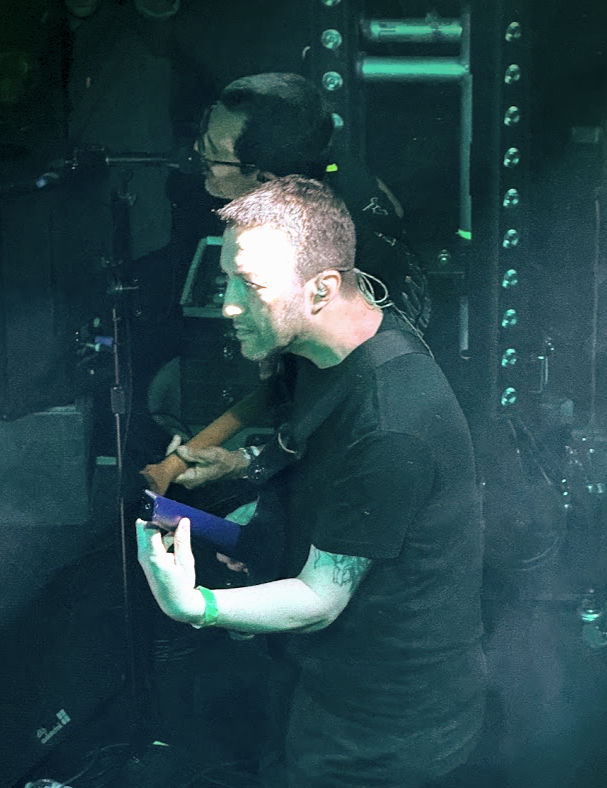
What Cynic carries into a 2026 set is heavier than the music itself. Both Reinert and Malone died in 2020, leaving Masvidal as the catalog’s sole surviving founding member and the figure responsible for the band’s continued existence. The contemporary live band is his project, and the work it’s doing is custodial in the most literal sense — making sure Focus, Traced in Air (2008), Kindly Bent to Free Us (2014), and Ascension Codes (2021) continue to be heard as one body of work rather than as a sequence of nostalgia stops.
On Friday, Cynic’s set was the bill’s stylistic disruption — clean tones and odd meters following 90 minutes of straight-ahead riff work, with the crowd shifting from a thrash mode into something more attentive and less physical. That’s the shape Cynic shows always take when programmed against a heavier headliner. The band is not on the bill to compete with Forbidden’s energy; it’s on the bill to remind the room how wide extreme metal’s harmonic vocabulary actually is.


Headliner: Forbidden
Forbidden closed. The current five-piece is Norman Skinner (vocals, since the 2023 reunion), founding guitarist Craig Locicero, second guitarist Jeremy Von Epp (officially announced November 19, 2025), bassist Matt Camacho, and drummer Chris Kontos. The band signed to BLKIIBLK Records on January 14, 2026 and is currently writing and pre-producing their first new album in fifteen years at Sharkbite Studios in Oakland with Zack Ohren producing — slated for a mid-2026 release.


A short refresher on the catalog the set was drawing from: Forbidden formed in early 1985 as Forbidden Evil, with drummer Jim Pittman and a young Robb Flynn on guitar; Flynn left in 1986 and the band shortened its name to Forbidden in 1987. Forbidden Evil (1988) is the band’s first canon entry and a record that any serious history of Bay Area thrash has to spend time on. Twisted into Form (1990) is the technical-thrash peak — the record cited most often when people argue that Forbidden was the most musically advanced of the second-wave Bay Area bands, the one whose guitar arrangements were doing things their peers weren’t. Distortion (1994) and Green (1997) closed out the band’s first run on GUN Records, with Green in particular pushing into alternative and groove territory in ways that divided the audience. They broke up in 1997, returned in 2007, went quiet again in 2012, and returned for good in 2023.
The newest face on the bill belonged to Von Epp, and his story is worth the room. A Bay Area-bred guitarist who spent two decades with The Venting Machine (2002–March 2023, including the well-regarded 2017 LP Shackles Be Gone), released Black Abyss and Nyctophilia with heavy-rock outfit The Watchers, and built a national profile from 2022 onward as the lead guitarist for the Van Halen tribute Hot For Teacher, Von Epp was originally called in by Locicero as a fill-in when VOIVOD’s Daniel “Chewy” Mongrain — who had played and recorded with Forbidden for the prior eighteen months — hit scheduling conflicts on the 2024–25 festival run. Von Epp proved out the role at Aftershock in Sacramento and Grita Fest in Colombia, debuting the new tracks “Divided by Zero” and “Mutually Assured Dysfunction” on stages where every note is being filmed. The band’s public statement was unambiguous: “Jeremy needed to be in Forbidden full time and we all agreed. It made too much sense with the chemistry we have together.” Mongrain, who contributed to three new Forbidden songs before stepping out, was thanked at length and remains, per the band, “family forever.”


Friday’s set worked exactly the part of the catalog the room had come for, classics like “Twisted Into Form,” “Chalice of Blood,” “Forbidden Evil,” and “Through Eyes of Glass” as part of the setlist. Skinner, now three years into the chair Russ Anderson held through the band’s classic period, is fronting a band that is no longer treating its reunion as a victory lap — the BLKIIBLK signing, the Sharkbite sessions, and the formalized Locicero/Von Epp twin-guitar pairing reframe everything about how to read these sets. The implication is that there will be new songs to play before the next tour cycle, and the band is essentially using the legacy material to warm the room for material that doesn’t exist yet in public.
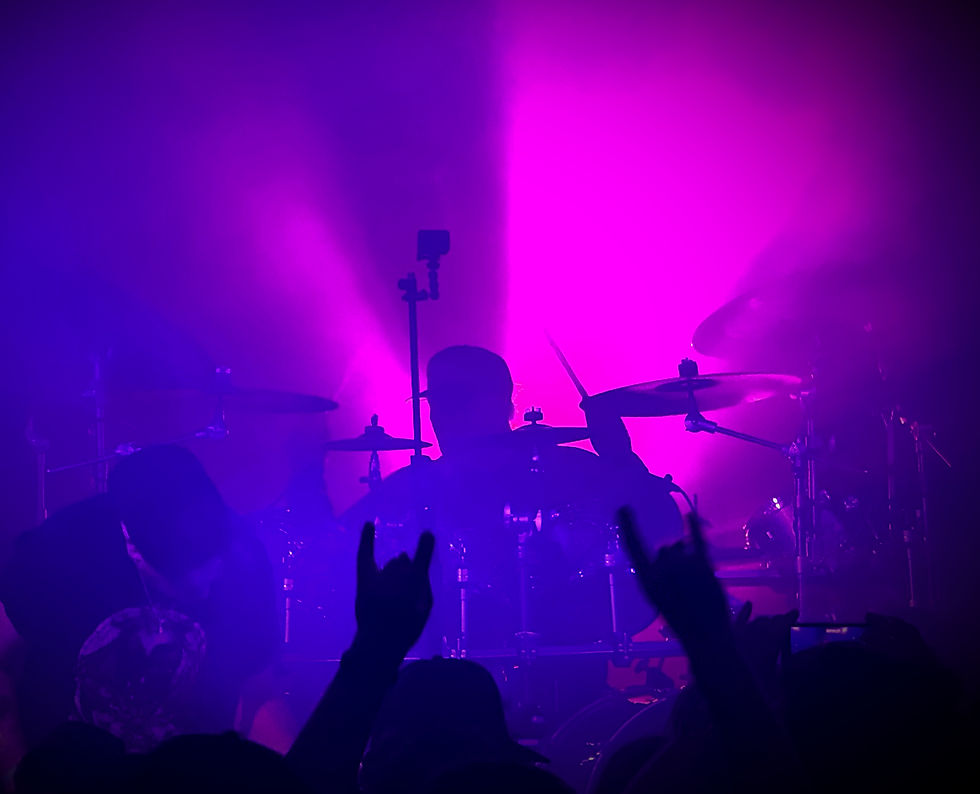
Locicero remains the architect, but Friday was the first GAMH headliner since the Von Epp announcement, and the practical effect on the live mix was obvious: the Twisted into Form–era arrangements — written for two guitars by Locicero and a rotating cast that has included Glen Alvelais, Tim Calvert, Steve Smyth, and Mongrain — were back in their original configuration. Solos that on a single-guitar live show have to be either skipped or layered against a backing track were played in real time. Kontos is hitting harder than the records do; Camacho is locked in. There’s a version of this reunion in which the band is content to be a museum, and there’s a version in which it is treating itself as a still-active concern with a new five-piece chemistry to sell. Friday read clearly as the second.
The Shape of the Night
The reason this show is worth a long write-up rather than a short one is the legibility of its structure. Cultural Warfare and Doomsday are not interchangeable openers — they are bands the headliner’s lineage and current production team are directly invested in. Cynic isn’t on the bill to chase a Bay Area thrash audience; it’s on the bill because Masvidal’s catalog and Locicero’s catalog have always belonged in conversation, even if the genre maps have rarely put them on the same page. Forbidden is not closing as a heritage act; it’s closing as a band three months from finishing a record.
That’s a real bill, in the old sense — assembled with a thesis, played in a room built for it. The next time Forbidden plays San Francisco, there will be new material in the set. We will be looking forward to it!


Comments